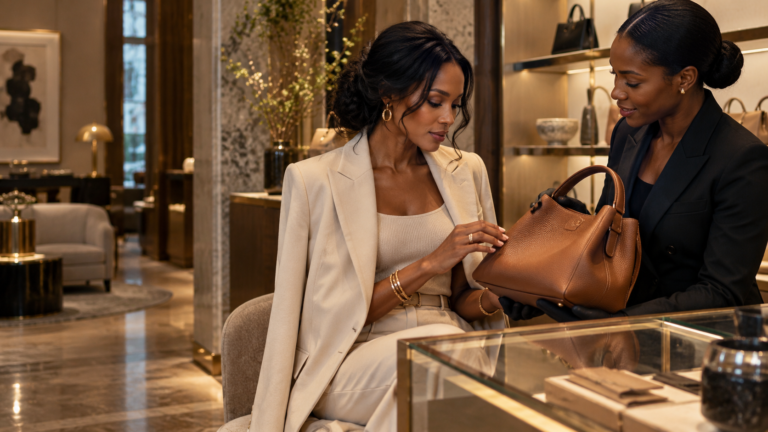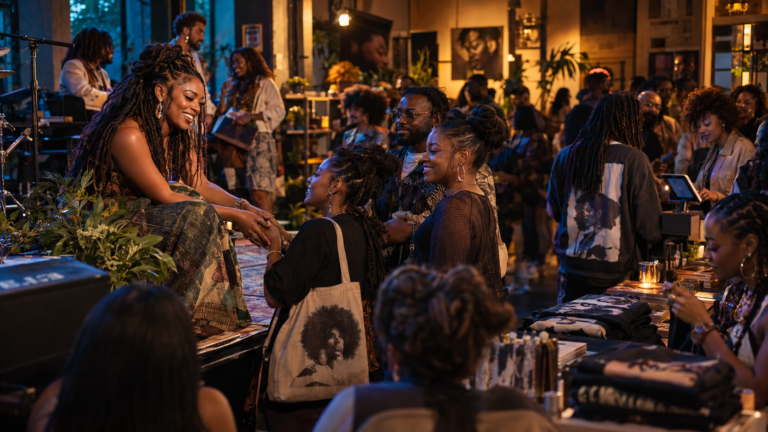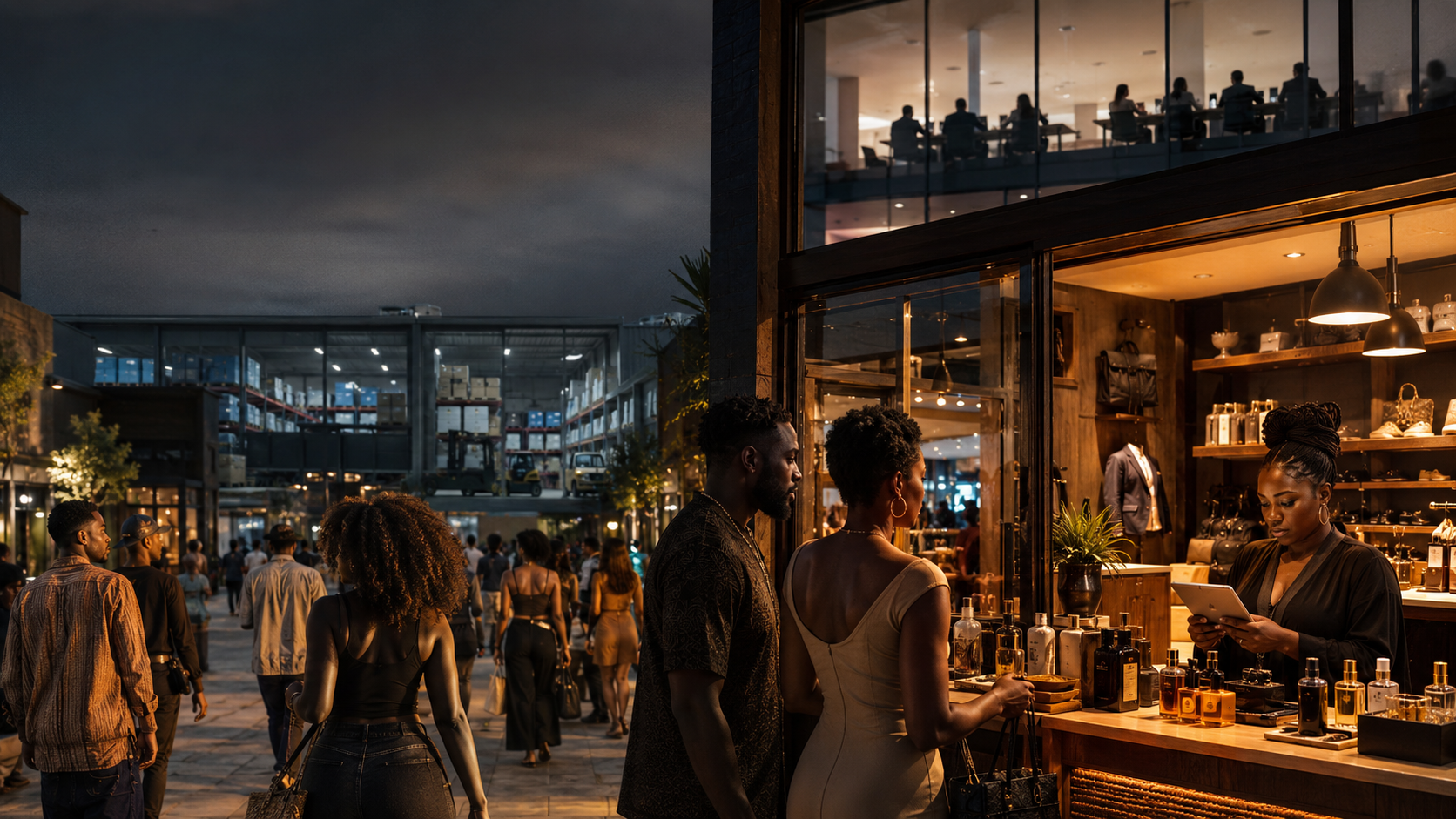
Black shoppers make up 11.1% of spending in the American beauty market. Black-owned brands get 2.5% of the industry’s revenue back. And McKinsey found Black consumers are three times more likely than other shoppers to be unhappy with the hair, skin, and makeup products actually on offer to them — so this isn’t even a market quietly doing right by people while someone else happens to own it.
A lot of money is going into a market that often isn’t built with these customers in mind, and not much of the profit — wages, royalties, whatever a sale eventually nets — makes its way back into Black households. “Buying power” headlines usually stop at the spending number and never get to where the money actually ends up.
The beauty numbers are just an easy way into a much bigger question. Black Americans have shaped enormous parts of fashion, music, media, personal care. How much of what’s actually built on top of that do they own?
Ownership Is Harder to See
There were over 200,000 Black-owned employer businesses in the U.S. by 2023, generating $249 billion combined and supporting around 1.8 million jobs — up from roughly 124,000 such firms in 2017. Brookings still puts Black people at only 3.4% of employer-business owners, against 14.4% of the population.
Business equity is one of the main ways households actually build wealth over time. People who’ve already succeeded at owning one thing also tend to find it easier to finance the next thing, rather than having to go ask permission all over again.
Most Black consumer spending, given that gap, ends up somewhere other than a Black-owned company almost by default. Trying to shop with one specifically sounds easy until you actually try to check — a brand can keep the “Black-founded” language on its packaging for years after the ownership behind it has completely changed. The founder’s story tends to stick around because that story is the reason people trusted the product in the first place.
SheaMoisture and Bevel After the Sale
Richelieu Dennis started out selling soap and shea butter on the streets of Harlem with his family. That became Sundial Brands, and Sundial eventually got SheaMoisture onto shelves at every major retailer — mostly by taking a category seriously that mainstream beauty companies had mostly ignored.
Unilever bought Sundial in 2017. Terms weren’t disclosed. Dennis stayed on afterward, and the deal led to the New Voices Fund, aimed at businesses owned by women of color. Unilever says the fund and the Dennis family have put more than $100 million into portfolio companies since.
Tristan Walker’s story runs parallel. He built a shaving system for people dealing with razor bumps from coarse or curly hair, took Walker & Company from direct-to-consumer into Target, and then P&G bought the whole company outright in 2018. Walker stayed as CEO.
When I started Walker & Company Brands, I set out to build a company that would meet the health and beauty needs of people of color on a global scale. — Tristan Walker
Selling gave both founders real money and real infrastructure — manufacturing and distribution reach that’s genuinely hard to build alone. Dennis used part of that to fund other founders.
Unilever owns Sundial’s brands now. P&G owns Walker & Company. Every SheaMoisture and Bevel sale flows up into those companies, and both brands still trade on credibility their founders built, years after neither one was a Black-owned business anymore.
Who Owns the Rights
For most packaged products, the value that sticks around lives somewhere you can’t see on a shelf — formulas, the brand name, supplier deals, customer data. Whoever holds those can reuse them across markets indefinitely without ever recreating the original idea that made the brand work.
Music makes this plainer. A song carries two separate sets of rights — the composition and the recording — and who owns the publishing versus who owns the master determines who gets paid when it streams, gets sampled, or lands in a commercial. WIPO describes copyright as exactly this mechanism: the legal structure that lets creators control use of their work and get compensated for it.
Black musicians have shaped the language of popular music for a century. Being associated with a sound isn’t the same as legally owning it. Salt-N-Pepa went to court trying to terminate old grants over recordings from early in their career, and in 2026 a federal judge dismissed the case, ruling they’d never owned the masters they were trying to reclaim, according to Pitchfork.
Nobody disputed Salt-N-Pepa’s place in music history. The case was only ever about the recordings, and who’s owed money from them.
Creators Can Reach Audiences They Do Not Control
Social platforms gave Black creators a real way around old media gatekeepers. A dance or a beauty tutorial can reach millions now without a broadcaster or publisher signing off first, and plenty of creators have turned that into sponsorships, subscriptions, product lines.
None of that reach belongs to the creator, though. Instagram, TikTok, YouTube hold the user data, decide what shows up in whose feed, and can change the rules or throttle an account whenever they want. Creators make the content people stay for. Platforms own the advertising system wrapped around it.
Even the sponsorship money reflects the gap. A 2024 study of UK creator rates found Black influencers being paid roughly 34% less than white influencers for comparable work, and the gap had widened since the same study ran in 2022, per Business Insider.
A big following gets you a brand deal. It doesn’t travel with you if a platform buries your account tomorrow — which is why some creators have started building email lists, memberships, or their own shops on the side, places an algorithm can’t reach.
Why Many Founders Decide to Sell
Selling isn’t always about a tempting offer landing on someone’s desk. Sometimes it’s the only realistic way to fund what comes next.
A national retail order means stocking inventory before the retailer pays you back. Expansion eats cash on staff, freight, marketing, and building an independent sales operation from nothing can burn through capital for years before it works. Crunchbase found U.S. startups with at least one Black founder raised about $942 million total in 2025 — 0.32% of all venture investment that year.
That figure doesn’t count bank loans or private money or a company just growing off its own revenue, and most companies shouldn’t be chasing venture funding anyway. Still, it’s a striking snapshot of how little of one major funding pool reaches Black founders at all. A company that can’t finance its own distribution ends up staying small, taking bad terms, or selling to someone who already has the shelf space sorted out.
How much leverage a founder has in that conversation usually comes down to financing. Someone who can borrow or fund growth from revenue gets to decide how much control they’re willing to give up. Someone staring down a cash crunch is negotiating an acquisition offer while also wondering if payroll clears next month.
Where Consumer Pressure Stops
The NAACP tried turning consumer spending into direct corporate pressure in 2025, publishing guidance that scored companies on whether they’d kept or dropped diversity commitments.
“If corporations want our dollars, they better be ready to do the right thing.” — Derrick Johnson
Shoppers can reward companies whose behavior they respect, and it’s worth checking who actually owns a company today instead of just trusting the name on the label. What consumer choices can’t do is hand a founder growth capital or renegotiate somebody’s old recording contract.
Founders need capital early enough that they’re not forced into trading away equity just to survive. Creators need real advice before signing anything away. Businesses need a way to reach customers directly instead of paying a platform’s toll every time. Shoppers need honest information about who they’re actually supporting, since a product built for Black consumers can still have no Black ownership behind it at all.
Beauty revenue, business ownership data, music rights, creator pay — different corners of the same market, same unfinished math.
Frequently Asked Questions
What’s the difference between Black-founded and Black-owned?
Black-founded describes history and doesn’t change. Black-owned describes who currently holds ownership and control, which can shift the moment shares or the whole business get sold.
Why does intellectual property matter here?
Rights over a brand, formula, or song can generate income for years or decades. Whoever owns them can license, sell, or reuse them long after the original work is finished.
Are acquisitions automatically bad for Black founders?
No. A sale can create real wealth and give a company resources it couldn’t have built alone — whether a specific deal was good depends on price, what rights transferred, retained equity, and the founder’s alternatives at the time.
How do platforms make money off creators?
Mostly advertising and subscriptions built around user attention. Creators get a share through sponsorships or revenue splits, but the platform holds the audience data and decides what gets seen.
What can Black businesses do to hold onto more value?
Register IP properly. Keep customer data somewhere other than a social platform. Read distribution agreements closely before signing. The right financing lined up early is often what separates selling on your own terms from being forced into a sale before you’re ready.