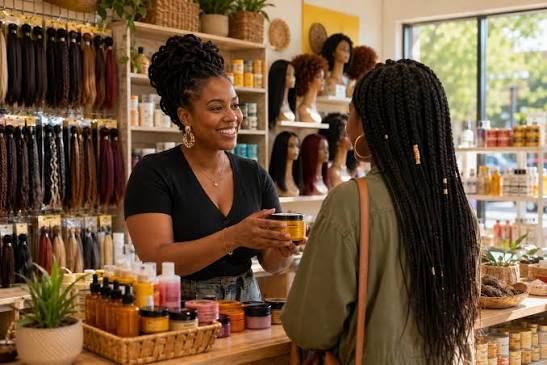
The estimated number of businesses owned by Black women rose 13% between 2024 and 2025, according to Wells Fargo’s 2026 Impact of Women-Owned Businesses report. The Wall Street Journal, which summarised the report, said the increase outpaced growth among businesses owned by other racial groups of men and women. Women-owned businesses overall grew by 4.4%.
The figure is an estimate of how many businesses Black women own. It does not count first-time founders or show how many businesses opened and closed during the year. That distinction is easy to lose in a headline about who is “launching” fastest.
Wells Fargo estimates that Black women own about 2.9 million U.S. businesses, roughly 18% of all women-owned companies. Their average annual revenue was about $41,000 in 2025. For women-owned businesses overall, the estimate was $179,000.
Those numbers describe revenue, not what owners take home. They also raise a question that a business count cannot answer: how many of these companies have the income and resources to grow?
The Numbers Depend on What Is Being Counted
Wells Fargo’s 13% figure compares estimated business numbers from 2024 to 2025. Its report also found that Black women-owned employer firms, those with paid staff, grew 18.3% from 2022 to 2025. Hispanic or Latino women-owned employer firms grew 37.2% over that period. The figures cover three years and only firms with employees, so they tell a different story from the one-year comparison.
The Kauffman Foundation tracks another stage of entrepreneurship: how many adults start a business in an average month. Its national rate for 2025 was 0.36%. The rate was 0.45% for Black adults, 0.53% for Latino adults, 0.33% for Asian adults and 0.29% for white adults. Kauffman separately put the rate at 0.28% for women and 0.44% for men. Those figures compare race and gender separately; they do not give a rate for Black women specifically.
So the available measures offer different glimpses. One estimates the number of businesses already owned. The other counts adults entering entrepreneurship. Neither follows a particular founder from opening day through the first year, a profitable year or an expansion.
The businesses themselves vary widely. Some are solo professional practices or online shops. Others have paid employees and larger operating costs. Digital storefronts and social media can help a founder find customers without first renting a shop, but a following does not always become steady sales. The owner still has to pay for stock, insurance, platform fees and her own time.
More Control Can Come with More Risk
The reasons women start companies vary. Some want greater control over their careers, income or schedules. Others start after a layoff or when advancement at work stalls. Those experiences can overlap, but the decision is rarely explained by one figure or one trend.
Wells Fargo’s report links the growth in Black women’s business ownership with barriers around capital, networks and business opportunities. A 2026 Wall Street Journal account described Erin Giddens, who had long wanted to start a company but stayed in corporate communications. After she was laid off and could not find another job, she focused on her video-production business.
Building something I own may be riskier in the short term and requires real sacrifices, but it gives me more control over my long-term future. — Erin Giddens
Giddens’s words capture the appeal without making self-employment sound easy. She gained more say over her work, but also took on the task of finding clients and covering costs. A founder may have more control over her direction and still face months when income is uncertain.
The average-revenue estimate offers another view of the challenge. A business bringing in $41,000 a year may have little left after operating costs. The figure cannot tell us how much any particular owner earns, but the gap with women-owned businesses overall points to a difference in scale.
Financing and Contracts Can Change a Company’s Prospects
Many businesses have to spend before a customer pays. A founder may need equipment or inventory, or have to cover payroll while waiting for an invoice. When a loan is unavailable, personal savings and credit cards can carry the business through. That can help keep it open, while moving more financial risk to the owner and her household.
The Federal Reserve’s 2026 chartbook on firms by race and ethnicity draws on its 2025 Small Business Credit Survey. It found that 32% of Black-owned employer firms that did not apply for financing said they were discouraged because they did not think they would be approved. The survey does not isolate Black women-owned firms, but it shows that some business owners rule out an application before a lender makes a decision.
Contracts can bring in repeat work. A government agency or large corporation can become a regular buyer, and completed work may help a business approach other customers. Wells Fargo identifies procurement as one possible route to growth for women-owned businesses. Yet finding an opportunity is only part of the job.
A company may need insurance, staff and working capital to deliver a contract. If the buyer pays late, the owner still has to cover costs in the meantime. And if the price is too low, a large order can keep people busy without leaving enough profit to hire or invest.
Outside investment and supplier certifications also bring decisions about ownership. Wells Fargo’s report describes ownership thresholds used in some supplier-diversity programmes. Equity financing can bring money and connections, but may reduce a founder’s share of her company. The right choice depends on what the business needs and what its owner wants to retain.
Ownership Is Only One Measure of Wealth
A small business is not always a failed growth story. A solo consultancy may suit its owner. An online shop can provide useful income without employees. Other firms stay small because their owners cannot afford staff, get credit or reach larger buyers. Business-count data cannot tell us which is happening.
Survival offers another measure. Kauffman reported that 77.9% of U.S. startups were still active after one year in 2025. That is a national figure for startups overall. It does not say how many Black women-owned businesses remained open, hired employees or expanded over several years.
Emma Grede, co-founder of Good American and founding partner of SKIMS, spoke about demand for Black-founded brands at the 2025 Washington Post Global Women’s Summit.
There are plenty of incredible retailers that see the need, that see the appetite from consumers. — Emma Grede
Retailers seeing demand can help a brand find customers. The company still needs to meet orders and keep enough cash on hand to operate. A strong product or a busy launch may open a door; consistent sales and retained earnings determine what a business can do next.
The 13% increase is a sign that Black women own more businesses than Wells Fargo estimated a year earlier. The revenue and financing figures point to the harder questions that follow: which companies can keep customers, earn enough to reinvest and secure the resources to expand?
For owners, tracking costs and payment schedules can show whether growth is bringing in enough cash to support the next step. For lenders and corporate buyers, access matters too: whether firms ready to expand can obtain financing and compete for contracts.
Business ownership can provide income and greater control over work. For some founders, a company may also become an asset they can keep, sell or pass to their families. The available business-count figures show momentum. They do not yet tell us how broadly that momentum is turning into lasting wealth.
Frequently Asked Questions About Black Women Entrepreneurs
How quickly are Black women-owned businesses growing?
Wells Fargo estimates that their number rose about 13% between 2024 and 2025. Women-owned businesses overall grew by 4.4% in the same period. These are business-count estimates, not counts of first-time founders.
How much revenue do Black women-owned businesses generate?
Wells Fargo estimates average annual revenue of about $41,000 per Black woman-owned business in 2025, compared with $179,000 for women-owned businesses overall. Revenue is measured before expenses, so it does not show how much owners kept.
Does business growth mean these firms are scaling?
Not necessarily. A rise in the number of businesses does not show whether firms are profitable, hiring or expanding. Revenue, employment, financing, and survival over time provide other measures.
What can make it harder for Black women-owned businesses to grow?
Limited access to financing, business networks and large contracts can restrict expansion. In the Federal Reserve’s 2025 survey, 32% of Black-owned employer firms that did not seek financing said they were discouraged because they did not expect approval.
Are Black women starting businesses only because of job losses?
No. Some founders seek greater control over their work and income; others start companies after layoffs or limited advancement opportunities. The reasons differ from person to person.
Can entrepreneurship help build intergenerational wealth?
It can, when a business provides reliable income or becomes an asset its owner can retain, sell, or pass on. Growth in business numbers signals more ownership, but does not establish how many owners have accumulated lasting wealth.