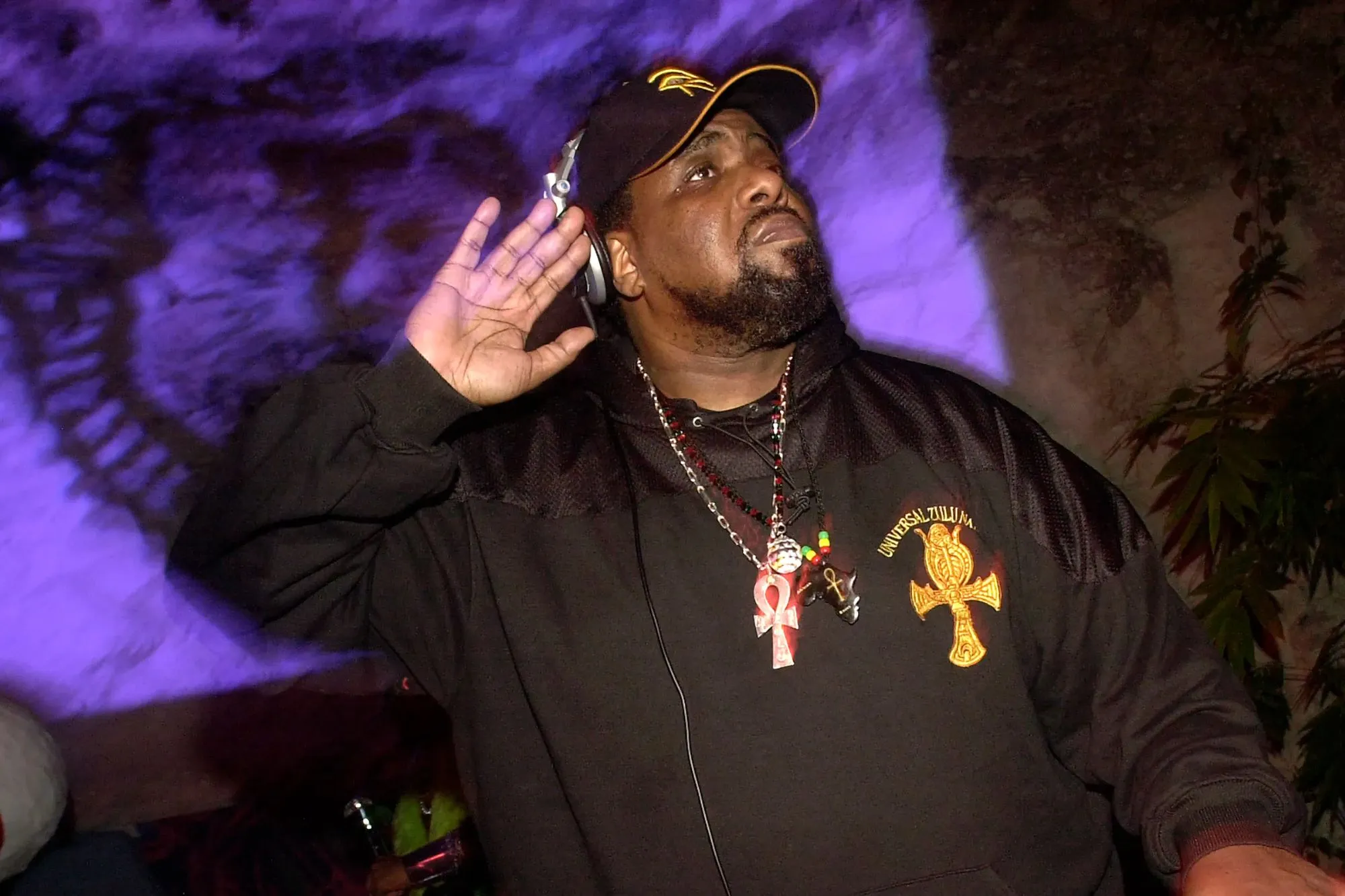
The global music community is mourning the loss of Afrika Bambaataa, a key figure in hip-hop culture, who died at 68. Reports confirm that he passed away in Pennsylvania due to complications from prostate cancer. This marks the end of an era for one of the most impactful figures in modern music history.
Born Lance Taylor in the Bronx, New York, in 1957, Bambaataa was a DJ, producer, and cultural innovator. He rose from the socio-economic challenges of 1970s urban America to create a cultural movement that crossed borders, languages, and generations. His journey started from local block parties in the South Bronx to worldwide fame. This reflected the growth of hip-hop itself.
Architect of a Global Culture
Bambaataa is often seen as one of the founding fathers of hip-hop. This is alongside other pioneers who turned street expression into a global artistic and social force. Through his early DJing, he helped shape breakbeat culture and turned block parties into venues for creativity and unity.
In 1973, he established the Universal Zulu Nation. This is a group that redefined hip-hop as a movement based on “peace, unity, love, and having fun.” This organization played a crucial role in guiding young people away from violence and towards artistic expression and community building.
His 1982 single “Planet Rock” is one of the most influential recordings in music history. It blends hip-hop rhythms with electronic sounds inspired by European synth music. Bambaataa helped create the electro-funk genre and laid the foundation for modern electronic dance music.
As tributes came in from around the world, his talent agency expressed the feelings of many: “Hip Hop will never be the same without him, but everything hip hop is today, it is because of him.”
A Legacy That Shaped Generations
Bambaataa’s influence went beyond music; it extended into social awareness and global culture. He was key in establishing hip-hop as more than just entertainment. He positioned it as a means for identity, resistance, and empowerment. His work played a part in important cultural moments, including collaborations related to anti-apartheid activism in the 1980s.
Fellow pioneer Kurtis Blow reflected on his lasting impact, saying that Bambaataa’s vision “transformed the Bronx into the birthplace of a culture that now reaches every corner of the world.”
From all over the world, the effects of his innovations continue to shape the music and youth culture of today.
A Complex and Contested Legacy
While his artistic achievements are significant, Bambaataa’s later years were troubled by serious allegations of sexual abuse that dated back decades. Multiple accusers came forward starting in 2016, leading to legal battles and his eventual withdrawal from leadership in the Zulu Nation.
These controversies have sparked ongoing discussions within the hip-hop community about accountability, legacy, and the responsibilities of cultural icons.
End of an Era, Continuation of a Movement
Afrika Bambaataa’s passing marks the end of a key chapter in the story of hip-hop. However, the movement he helped start continues. His contributions to sound, culture, and community-building remain embedded in the very fabric of global music.
As the world reflects on his life, one reality stands out. Hip-hop, now a multibillion-dollar global industry and a powerful cultural force, owes a tremendous debt to his vision.
In the rhythm of every beat, the energy of every cypher, and the voice of every emerging artist, the spirit of Afrika Bambaataa lives on. It is complex, transformative, and impossible to overlook.

![Box Office Breakdown: Did [Black-Led Films] Dominate Summer 2026?](https://blackelites.com/wp-content/uploads/2026/10/Box-Office-768x432.png)