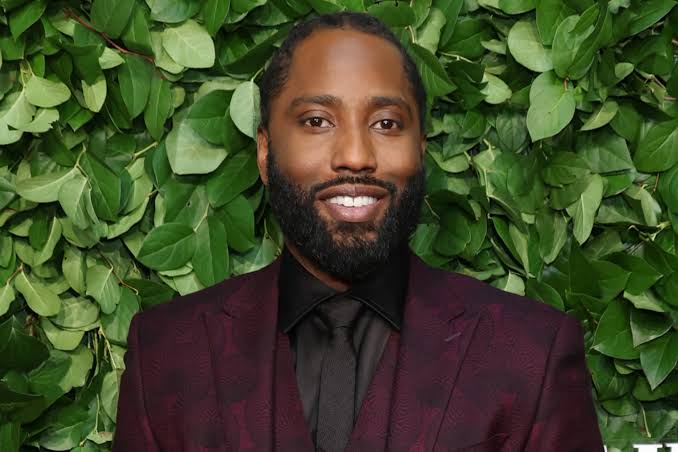


Benjamin Crump is an American civil rights lawyer best known for representing families in significant racial justice cases over the last decade. These include Trayvon Martin, George Floyd, Breonna Taylor, and Ahmaud Arbery. A graduate of Florida State University and the founder of Ben Crump Law, he has gained national attention by combining courtroom advocacy, public pressure, and media visibility. His cases often serve as moral tests for the nation.
Crump’s rise is more than just the story of a successful attorney. He has transformed civil litigation into a way to intervene in civic matters. In today’s America, many cases start as local tragedies and evolve into national discussions. Crump has become one of the country’s most recognized legal figures. Supporters see him as a tireless advocate for families who might be overlooked otherwise. Critics suggest that he works just as much in the court of public opinion as he does in a courtroom. Still, even his critics cannot deny his influence. Over the past decade, Crump has established himself as a key figure in the American justice conversation.
Early Life, Education and the Making of a Civil Rights Lawyer
Benjamin Lloyd Crump was born on October 10, 1969, in Lumberton, North Carolina. He was raised in modest circumstances, with his mother working in a shoe factory and a hotel. Crump has stated that his desire to become a lawyer started in childhood when he witnessed unequal resources and opportunities due to school integration. He later attended Florida State University, earning a bachelor’s degree in 1992 and a Juris Doctor in 1995 from the Florida State University College of Law.
This background is significant as it sheds light on the central theme of Crump’s public identity. He does not see himself merely as a litigator seeking verdicts. He frames his work as a response to systems that too often fail Black Americans until the issues become impossible to ignore. His firm’s guiding phrase, “justice equals respect,” reflects this moral foundation.
The Case that Made Him Nationally Known
Crump gained widespread recognition in 2012 when he represented Trayvon Martin’s family. The killing of the unarmed Black teenager in Florida ignited national outrage and spurred the modern Black Lives Matter movement. While this case was not his first as a lawyer, it significantly changed his public image. Before Trayvon Martin, Crump had handled challenging civil rights cases. This includes the death of Martin Lee Anderson, a Black teenager who died after being beaten at a Florida juvenile facility. However, Trayvon Martin elevated him to national prominence.
From that point, Crump became the attorney many grieving Black families turned to when death or abuse cases seemed likely to vanish into bureaucracy or local politics. This trend shaped the next stage of his career and made him a prominent figure in high-profile civil rights litigation.

The Lawyer Behind America’s Biggest Justice Cases
Crump’s list of cases reads like a map of America’s most painful justice moments. His official biography states he has represented the families of George Floyd, Breonna Taylor, and Ahmaud Arbery, as well as those affected by the Flint water crisis and Henrietta Lacks’s family. Independent reporting verifies many of these interactions and the significant legal results attached to them.
In George Floyd’s case, Minneapolis agreed in 2021 to pay Floyd’s family $27 million to settle a civil lawsuit over his death in police custody. This settlement was reached as jury selection began for Derek Chauvin’s murder trial. Crump led the Floyd family’s legal team, solidifying his position as the country’s most prominent civil rights attorney.
In Breonna Taylor’s case, Louisville agreed to pay Taylor’s family $12 million in 2020 and to implement police reforms as part of a settlement. Crump stood beside Taylor’s family during one of the most symbolically charged police violence cases of that time.
After Ahmaud Arbery’s murder, Crump represented Arbery’s family, keeping national attention focused on a case that tested racial justice beyond just policing. It involved armed civilians, local prosecution delays, and public pressure. His official biography lists the Arbery family among those who sought his help during crucial moments.
Crump’s work has also extended beyond police violence cases. He represented families that the Flint water crisis affected and later Henrietta Lacks’s family, whose cells were taken without consent for biomedical research. In 2023, the Lacks family reached a confidential settlement with Thermo Fisher Scientific, and in 2026, they reached another settlement with Novartis. This shows that Crump’s work has impacted areas like medical ethics, corporate accountability, and historical reparative justice.
More recently, Crump has taken on cases drawing national attention. In 2024 and 2025, he represented the family of U.S. Air Force Senior Airman Roger Fortson, who a Florida sheriff’s deputy shot and killed. In late 2024, he also appeared for Malcolm X’s family in a $100 million lawsuit accusing federal and New York agencies of concealing prior knowledge of the civil rights leader’s assassination. These cases demonstrate that Crump’s role has evolved from responding to headline tragedies to shaping longer legal battles around state violence, institutional accountability, and historical wrongs.
Why Benjamin Crump Matters in American Public Life
Crump’s significance goes beyond the size of settlements or the fame of his clients. He is in a unique position at the crossroads of law, activism, and media. During the George Floyd trial, he stayed physically and emotionally close to the family while also serving as one of the public voices of the case. This dual role has become a trademark of his practice: part trial lawyer, part strategist, part public advocate.
This strategy has made him effective in today’s media environment. Major justice cases now unfold on multiple fronts: court filings, press conferences, body-camera footage, political statements, and public protests. Crump knows how to navigate this terrain. He has transformed the press conference into an extension of the legal brief and the civil lawsuit into a tool for not just compensation but also for controlling the narrative and applying pressure to institutions. This is one reason families continue to seek his help.
There is also a symbolic aspect to his work. Crump rose to prominence representing families whose losses fueled the Black Lives Matter movement. Over time, he has come to represent a specific kind of legal hope: the belief that even when criminal law fails, civil law, public attention, and disciplined advocacy can still make a difference.
Recognition, Influence and Institutional Stature
Crump’s visibility has led to formal recognition. TIME listed him among the most influential people in the world in 2021. In 2023, the NAACP awarded him the Social Justice Impact Award. In 2024, Forbes included him in its first list of America’s Top 200 Lawyers.
His influence deepened when St. Thomas University named its law school after him. The school called the renaming a historic moment in 2023. The institution now operates as the Benjamin L. Crump College of Law. For a practicing attorney to have a law school named in his honor while still actively involved in major litigation is a clear mark of significant influence.
Crump has also held important leadership positions within the legal community. Florida State University notes that he was sworn in as president of the National Bar Association in 2015. This role gave him a platform as both a litigator and a voice in Black legal leadership across the nation.
The Writer, Speaker and Builder of a Public Philosophy
Crump’s career extends beyond litigation. HarperCollins published his 2019 book, Open Season: Legalized Genocide of Colored People, a powerful work on race and the justice system. In 2026, Penguin Random House published his legal thriller, Worse Than a Lie. Together, these books suggest that Crump views storytelling as part of the justice struggle rather than something separate from it.
His public comments support that idea. At St. Thomas University in 2024, he told graduates, “I was never the smartest person in the room. But I was dedicated to putting my best foot forward, rejecting mediocrity.” This line reveals how Crump sees himself—not as a legal celebrity first, but as a determined individual who turned persistence into power.
Another quote, made during the George Floyd trial, highlights how he views these cases on a larger scale. He referred to the trial as a “referendum on how far America has come in its quest for equality and justice for all.” This statement explains why he is central to public discussions about race and law. He does not treat these cases as isolated incidents; he views them as national challenges.
So, Who is Benjamin Crump Really?
Benjamin Crump is a civil rights lawyer, a high-stakes trial attorney, a public advocate, and a builder of legal memory. He is the attorney families turn to when grief meets power. He is behind some of America’s most significant justice cases because he has spent years making himself essential in the kinds of cases where the legal system faces its greatest moral challenges.
His legacy is still developing, and some of his most ambitious cases are still in progress. However, one conclusion is already clear: Benjamin Crump has changed the role of a civil rights lawyer in 21st-century America. He has demonstrated that, in an era of viral evidence, public outrage, and deep distrust in institutions, legal advocacy is no longer just about what happens in court. It also involves whether a family, a community, and a nation can be compelled to face what justice demands.
FAQs
Who is Benjamin Crump?
Benjamin Crump is an American civil rights attorney and founder of Ben Crump Law. He is known for representing families in major cases involving Trayvon Martin, George Floyd, Breonna Taylor, Ahmaud Arbery, and others.
What is Benjamin Crump famous for?
He is famous for handling some of the most high-profile racial justice and wrongful death cases in modern America, often involving police violence, civil rights violations, and systemic inequality.
Where did Benjamin Crump go to school?
He earned both his bachelor’s degree and law degree from Florida State University, completing his J.D. in 1995.
What cases has Benjamin Crump worked on?
His verified case record includes matters involving Trayvon Martin, George Floyd, Breonna Taylor, Ahmaud Arbery, Flint water crisis residents, the family of Henrietta Lacks, Roger Fortson, and Malcolm X’s family.
Has Benjamin Crump received major honors?
Yes. He was named to the TIME100 in 2021, received the NAACP Social Justice Impact Award in 2023, and was included on Forbes’ America’s Top 200 Lawyers list in 2024.