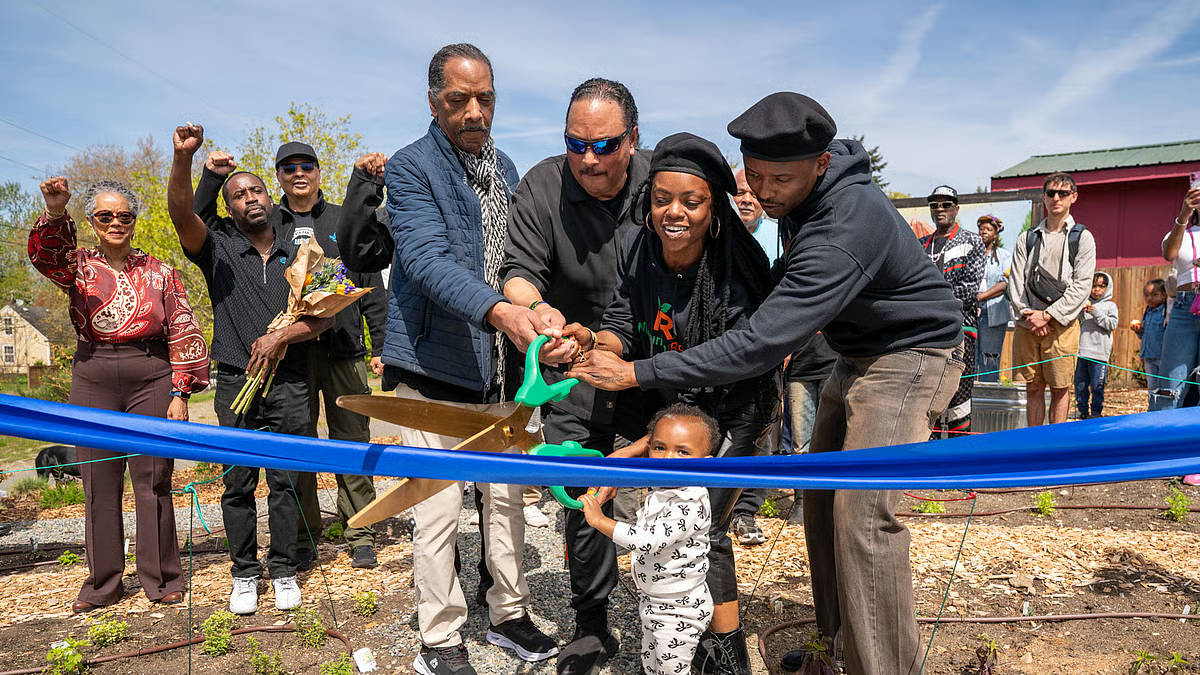
A new public space honoring the legacy of the Black Panther Party has opened in Skyway, just south of Seattle. This moment is significant for remembrance, community pride, and historical recognition. Black Panther Park officially celebrated its opening with a ribbon-cutting ceremony on April 19, 2026. It is located at the intersection of Renton Avenue South and South 75th Avenue. Organizers describe it as a living tribute to Black political courage, mutual aid, and community survival.
While the park is referred to as being in Seattle, it is more accurately in Skyway. This is an unincorporated area of King County near Seattle. It specifically honors the legacy of the Seattle chapter of the Black Panther Party. This distinction is important because the project is linked to local geography, history, and activism.
Black Panther Park came to life through years of effort led by Nurturing Roots. This is in collaboration with King County Parks and Stone Soup Gardens. The project faced various delays. Such delays include disruptions from the pandemic, but local residents and organizers pushed through to create a space that preserves history while addressing current community needs. At the opening, Aaron Dixon and Elmer Dixon, founders of the Seattle chapter, attended the dedication. They added both symbolic importance and historical context.
What makes the park unique is its design as a civic space rather than a static memorial. It reflects the spirit of service that characterized much of the Panthers’ local work. According to Nurturing Roots, the site features:
- a central gathering area
- herb and medicinal beds
- bench seating
- ADA-accessible paths and parking
- a community food pantry, a lending library
- and murals created by local artists.
King County’s Department of Local Services, which supported the project in 2025, indicated that the park would include a living history space, gardens, artwork, and community resources meant to serve for generations.
This design is purposeful. It mirrors the political and social legacy of the Panthers. The Seattle chapter, founded in April 1968, was the first Black Panther chapter outside California and the second outside Oakland. Historical records illustrate that the group developed community programs beyond protests. These include free breakfasts for children, transport support for families visiting incarcerated relatives, and a free medical clinic.
This history helps explain why the opening of Black Panther Park is so meaningful. In Seattle, the legacy also includes community-building, health access, food justice, and grassroots care. The park’s programming and features intentionally reflect that tradition, particularly the focus on feeding, teaching, healing, and gathering.
According to reports, Nyema Clark, founder of Nurturing Roots, told attendees, “Everyone who contributed to this, this is your park. This is our space.” She also remarked that the project aimed to honor “the ancestors,” “our parents’ work,” and the Black radical tradition represented by the Seattle Panthers. Her words encapsulated the park’s deeper purpose: to celebrate not just a movement, but to return its memory to the people who upheld it and the neighborhoods impacted by it.
Clark highlighted the historical significance of the achievement. In an interview with the Renton Reporter, she mentioned, “The Black Panthers have played a crucial role in many parts of history, not just in Seattle, but in American history.” She pointed specifically to the movement’s food and health programs. She noted that after years of struggles and delays, “it is profound that this is the first one, and we are deeply honored to do it.”
The opening also made it clear that memory alone is not sufficient. Elmer Dixon reflected on the meaning of the Panthers’ social programs, reminding the audience that these were never meant to be charity separated from structural change. As reported by the South Seattle Emerald, he stated that the programs were “survival programs pending revolution, and the revolution is still pending.” This statement connected the historical mission of the party to ongoing discussions about racial justice, economic inequality, and public investment.
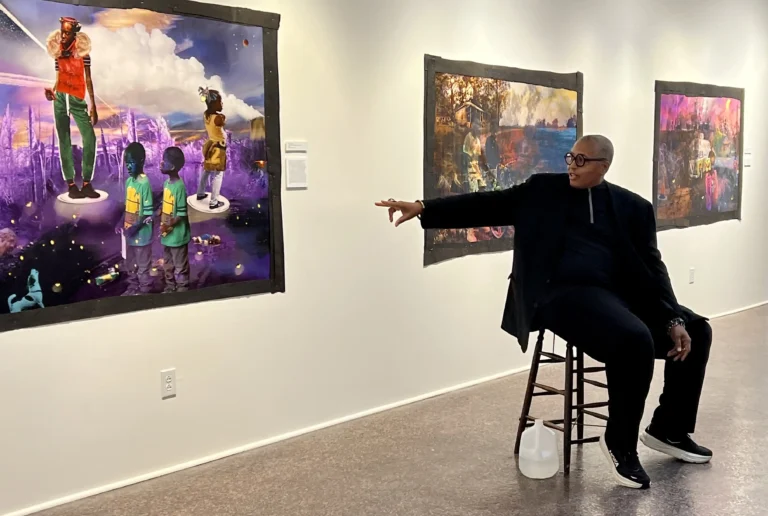
The park’s visual design reinforces that message. In March, nearly 100 people gathered for the unveiling of nine murals by local artists. Coverage of that event described the artwork as a collective interpretation of the Panthers’ impact on black community life. Na’eem Shareef, an original member of the Seattle chapter, remarked, “It’s wonderful to see the community come together, combining different parts to make this work.” The murals transform the site into more than just green space; they turn it into a public classroom.
The park’s location also has political significance. While the Seattle chapter’s most prominent efforts are associated with the Central District, the park sits in Skyway. a community with a large Black population that has historically faced underinvestment and limited recognition. Local coverage framed the ceremony as not only a cultural celebration but also part of a broader push for sustained investment in Black communities. In this way, Black Panther Park stands as both a memorial and an argument: a statement asserting that history should not only be documented but integrated into the landscape.
The park opens at a time when American cities are reevaluating who is remembered in public spaces and how. Parks, statues, street names, and murals are no longer seen as neutral decorations; they are civic decisions. Black Panther Park enters this conversation with a clear message. It honors a movement that was controversial and often misrepresented, yet also transformative in undeniable ways.
Quick Answers
Where is Black Panther Park?
Black Panther Park is in Skyway, in unincorporated King County near Seattle, at Renton Avenue South and South 75th Avenue.
When did Black Panther Park officially open?
The official ribbon-cutting ceremony was held on April 19, 2026.
Who does the park honor?
It honors the legacy of the Seattle chapter of the Black Panther Party, including its history of community care, food programs, health advocacy, and neighborhood organizing.
Who helped build the park?
The project was developed through collaboration involving Nurturing Roots, King County Parks, and Stone Soup Gardens, with county-backed funding for parts of the park’s living history and community features.
What features does the park include?
The park includes gathering space, herb and medicinal beds, ADA-accessible paths and parking, a food pantry, a lending library, and murals by local artists.