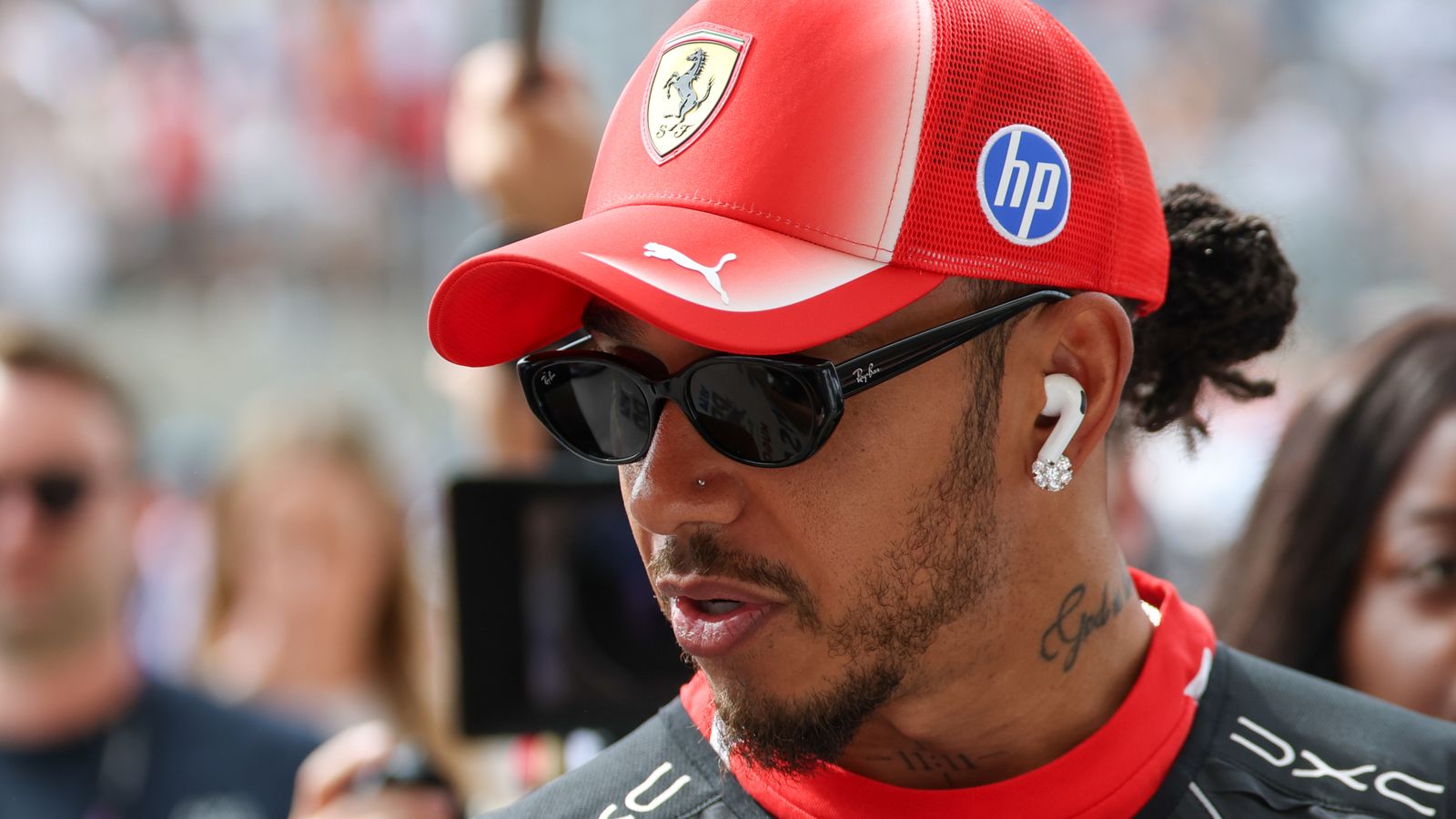
Lewis Hamilton holds most of the records that matter in Formula One — more race wins than anyone, a record 104 pole positions, and seven world championships tied with Michael Schumacher for the most ever. He is also the first Black driver to race in the series and, so far, still the only one. For most of his career those two facts sat side by side without touching. Since 2020 they’ve been fused: Hamilton has spent his standing as the sport’s dominant competitor on a sustained attempt to change who gets to work in it, from the grid to the factories behind it.
The Only One in the Room
Hamilton grew up in Stevenage, a town north of London, in a family with no history in motorsport and no money in it either. Racing charges for everything — karts, entries, travel, coaching — and the ladder from club karting to a Formula One seat costs families hundreds of thousands of pounds before anyone earns a cent. His father, Anthony, worked several jobs at the same time to keep his son’s career alive, which made them the exception rather than a model anyone else could follow.
Hamilton has said he was often the only Black child at the track, and he has described racist treatment in his karting years. He reached F1 in 2007 with McLaren and nearly won the championship as a rookie; a year later he took his first title at twenty-three, then the youngest champion the sport had ever had. What he didn’t get, arriving as the first Black driver in the sport’s history, was an industry that had examined what that meant.
The Commission He Paid For
In June 2020, weeks after the murder of George Floyd, Hamilton called out his own industry’s silence and announced The Hamilton Commission, a research project run with the Royal Academy of Engineering into why so few Black people work in UK motorsport. The report arrived in July 2021. Its headline finding: fewer than 1 percent of the people working in Formula One are Black.
Fewer than 1 percent of the people working in Formula One are Black.
The report was more specific than that number. It mapped where the pipeline actually breaks — mostly at school, in STEM subjects, years before anyone picks engineering as a career — and it made the point most coverage missed: driving is the smallest part of the industry. The thousands of real jobs sit in engineering, aerodynamics, data, and logistics, and those roles recruit from a short list of universities and a shorter list of networks. Its roughly 45 recommendations targeted education, hiring, and retention rather than driver scholarships alone.
Mission 44 and the Follow-Through
A lot of reports die at publication. This one got funding and structure. Mission 44, Hamilton’s foundation, launched the same month the report appeared, organized around education, employment, and empowerment for young people from underserved backgrounds. Its first partnerships included Teach First, with a program to bring 150 Black trainee teachers into schools in England — aimed at the classroom, because that’s where the report said the leak begins.
Separately, Hamilton and his team launched Ignite, a partnership with Mercedes that funds apprenticeships and scholarships designed to move underrepresented talent into the team itself and the wider paddock workforce. The commission produced the map; these two organizations are the spending.
The T-Shirt and the Rulebook
The public side was less patient. After the killing of Breonna Taylor, Hamilton stood on the podium at the Tuscan Grand Prix wearing a shirt that read “Arrest the cops who killed Breonna Taylor.” The FIA looked into the gesture and brought no penalty. Months later, under a new president, the governing body introduced rules restricting political statements by drivers — widely read as a direct response to him. Hamilton said the rules wouldn’t stop him from speaking out.
He had been doing the unprompted version since the 2020 season opener: taking a knee in an End Racism shirt while several rivals stood, and pushing F1’s We Race As One campaign harder than the campaign seemed to want to be pushed. When fans booed him at Silverstone in 2021 after a collision with Max Verstappen, the racial abuse that followed online was condemned across the sport. He kept racing and kept repeating the same sentences.
Changing the Room Changes the Sport
The measurable shift came in the behavior around him. Drivers who had never spoken about racism were kneeling and posting within weeks. Teams began publishing diversity commitments. Mercedes built hiring programs with the Ignite money. Hamilton took a seat on the Grand Prix Drivers’ Association board, giving him an institutional channel and not just a microphone. And the move to Ferrari, announced in early 2024, made him the first Black driver to race for the sport’s oldest and most famous team.
The Leverage Was Earned
A rookie who stands on a podium in a Breonna Taylor shirt gets a conversation with his manager. Hamilton’s statements got rule debates and foundation partners because of what came before them: the titles, the records, and a market value that Forbes has ranked among the highest in sport. The influence wasn’t granted by the sport he was criticizing.
Seven championships bought him the right to be heard.
The work is unfinished. The commission’s recommendations are still being worked through, Mission 44 keeps expanding its programs, the workforce remains overwhelmingly white, and he remains the only Black driver the championship has ever had. That last fact is the reason the effort started, and the reason it hasn’t stopped.
Common Questions About Lewis Hamilton’s Diversity Work
What is The Hamilton Commission?
A research initiative Hamilton launched in June 2020, run with the Royal Academy of Engineering, to study the near-total absence of Black people in UK motorsport. Its July 2021 report made roughly 45 recommendations across education, recruitment, and workplace culture.
What is Mission 44?
Hamilton’s charitable foundation, launched in 2021, focused on education, employment, and empowerment for young people from underserved backgrounds. Its partnerships include a program with Teach First to recruit 150 Black trainee teachers into English schools.
Why did Lewis Hamilton wear a Breonna Taylor T-shirt?
He wore it on the podium at the 2020 Tuscan Grand Prix, after Breonna Taylor was killed by police in Louisville. Hamilton said the sport’s silence on racism was unacceptable and used his position to force the issue. The FIA investigated the gesture and took no action.
Is Lewis Hamilton the only Black F1 driver?
Yes — the first and, so far, the only Black driver to race in the Formula One world championship. He has said he would like that to stop being true.
Has Formula One become more diverse since 2020?
Somewhat, and slowly. Drivers began taking a knee, teams published diversity commitments, and the commission and Mission 44 built funded pathways into engineering careers. The workforce remains overwhelmingly white by the commission’s own measures.
Is Lewis Hamilton a knight?
Yes. He was knighted for services to motorsport, announced at the end of 2021.
Does Lewis Hamilton own a racing team?
He owns X44, a team in Extreme E, the electric off-road racing series. He doesn’t own a Formula One team, and his ownership footprint instead runs through ventures like a limited partnership stake in the Denver Broncos.