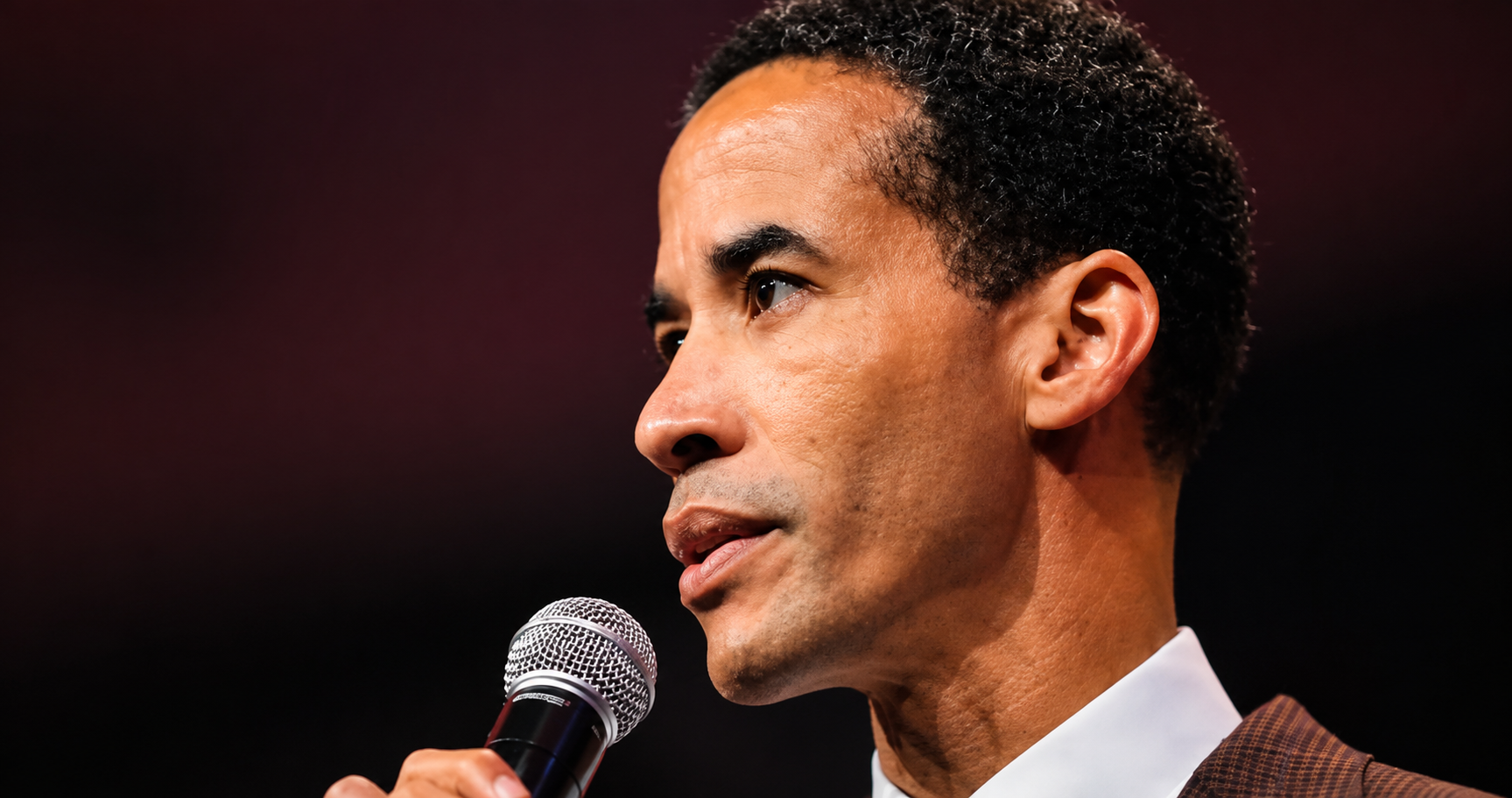
Few technology executives have helped create multibillion-dollar results at two of the enterprise software industry’s biggest companies. When Charles Phillips joined Oracle as co-president in 2003, the company aimed to grow beyond its database business and strengthen its position against SAP in the enterprise applications market.
Phillips helped drive Oracle’s expansion through landmark acquisitions including PeopleSoft, Siebel Systems, BEA Systems, and Sun Microsystems. After leaving Oracle in 2010, he took on a challenging role as CEO of Infor, a private software company that competes with larger firms like Oracle and SAP. Rather than imitating these competitors, Phillips shifted Infor from broad enterprise software towards industry-specific cloud platforms designed around the workflows of individual sectors.
In his first three years at Infor, the company brought on 1,500 engineers and launched about 300 products. Entities backed by Koch later invested over $3.5 billion in the company before Koch bought out the remaining equity in 2020 in a deal valued at nearly $13 billion. Although Phillips did not start Oracle or Infor, his contributions in growing one and transforming the other demonstrate how strategic acquisitions, product improvement, and industry focus can generate billion-dollar value repeatedly.
The Strategy
Put a Deadline on Strategic Uncertainty
A transaction that remains open indefinitely gives the other party more negotiating power. Set a credible deadline, define acceptable terms, and be ready to walk away. According to Wired, Phillips mentioned, “Oracle has no interest in a long, drawn-out process to acquire BEA.”
Oracle’s pursuit of PeopleSoft took about 18 months before the companies agreed to a $10.3 billion deal. This lengthy battle created uncertainty for customers and employees and allowed competitors, especially SAP, to question Oracle’s reliability.
When Oracle pursued BEA Systems later, Phillips communicated a more decisive approach. Oracle set a deadline on its $17-per-share offer and stated publicly that it wouldn’t let negotiations drag on without resolution. The lesson from PeopleSoft turned into a repeatable rule: strategic persistence should not lead to open-ended exposure.
Identify Who Actually Controls the Economic Decision
Management, boards, investors, and customers might want different outcomes. Before entering a negotiation, find out who has the final say on whether value can be realized. This played out when Oracle urged “the BEA board of directors to let BEA’s shareholders decide.”
Oracle framed its offer not just as a negotiation with BEA’s directors but as a matter of shareholder value. Its $17-per-share cash proposal was a significant premium over BEA’s earlier trading prices. By making those figures public, Phillips shifted the focus from management resistance to the financial interests of the company’s owners.
This rule applies beyond acquisitions. When launching a product, raising money, or restructuring a company, executives must distinguish users from buyers, buyers from approvers, and approvers from those who bear the financial risk.
The 18-Month Deal That Exposed a Process Weakness
Oracle completed its acquisition of PeopleSoft, but the path to the deal exposed the cost of a lengthy corporate battle.
The pursuit lasted about 18 months and faced resistance from PeopleSoft, regulatory scrutiny, and ongoing uncertainty about the companies’ futures. Although Oracle secured the deal for $10.3 billion, this process gave competitors more time to court unsettled customers and position themselves as safer options.
The mistake was not Oracle’s willingness to pursue the asset. It was allowing the acquisition process to become a lengthy strategic challenge in itself.
Phillips’ later strategy for BEA showed what had changed:
– Set a clear expiration date.
– Publish the financial rationale behind the offer.
– State the conditions under which the buyer will walk away.
– Direct the value argument toward the shareholders who bear the economic consequences.
This did not eliminate negotiation risk, but it lessened uncertainty around Oracle’s intentions.
Power Network: Capital, Enterprise Access and Repeat Deal Flow
Backers
At Infor, Phillips worked with institutional support from private-equity owners like Golden Gate Capital and Summit Partners. Koch’s multibillion-dollar investment later provided additional funds and introduced a vast industrial network where Infor’s software could be used and tested.
Phillips has since expanded that network through Recognize Partners, the technology-services investment firm he co-founded with former Cognizant chief executive Frank D’Souza and investor David Wasserman. Recognize raised a $1.3 billion debut fund and announced a $1.7 billion second fund in 2025.
Operators and Successors
Public evidence does not show a large group of founders as Phillips’ formal protégés. The most notable example of internal leadership development is Kevin Samuelson, Infor’s former chief financial officer, who became CEO after Phillips in 2019.
At Recognize, Phillips collaborates with seasoned operators and investors instead of only acting as a mentor. Portfolio companies have included technology-services businesses like AST, Sprout, 2X, and Tranzact.
Strategic Access
The network gives Phillips three strong advantages:
– Enterprise intelligence: Access to companies buying complex software and technology services.
– Capital formation: Relationships with private-equity firms, institutional investors, and strategic corporate backers.
– Operator-led deal flow: The ability to evaluate businesses based on the experience of executives who have built, acquired, and integrated large technology organizations.
Recognize targets as technology-services companies with enterprise values generally between $50 million and $500 million. This focus allows Phillips to apply lessons from Oracle and Infor to smaller companies that are approaching their next phase of growth.
Strategic Lessons: Conduct a Verticalisation Audit
Choose one broad customer category your company serves. Then break it down into three narrower operating segments.
For each segment, document:
– The workflow that is unique to that segment.
– The cost of using a generic product.
– The feature, service, or pricing model that would eliminate that cost.
– The executive who controls the purchasing decision.
– The measurable result that would justify switching providers.
Do not start by asking how to sell the same product to more customers. Instead, ask what would make the product significantly more useful to one valuable commercial group.
That is the practical principle behind Phillips’ Infor strategy: specificity can become a competitive advantage when scale is lacking.
Visual: Charles Phillips’ Scale-and-Value Timeline
| Period | Strategic decision | Financial or operating result |
| 2003–2010 | Served as Oracle co-president and helped lead its acquisition programme | Oracle reached approximately $26.8 billion in annual revenue by FY2010 |
| 2004 | Oracle completed its prolonged pursuit of PeopleSoft | $10.3 billion acquisition |
| 2010 | Left Oracle to lead Infor | Shift from a public-market leader to a privately held challenger |
| 2011 | Infor expanded through Lawson Software | Approximately $2 billion acquisition |
| 2010–2013 | Increased product and engineering investment | About 300 products introduced and 1,500 engineers hired |
| 2014 | Infor launched CloudSuite on AWS | Accelerated its transition towards cloud delivery |
| 2017–2019 | Koch entities made strategic investments | More than $3.5 billion committed across two investments |
| 2020 | Koch acquired the remaining Infor equity | Transaction reported at nearly $13 billion |
| 2025 | Recognize announced its second fund | $1.7 billion, following a $1.3 billion first fund |
Phillips’ career shows a consistent progression from executing large acquisitions, to repositioning an enterprise-software company, to investing in technology-services businesses using operator-led private equity.
Today, Charles Phillips is a co-founder and managing partner at Recognize, a private equity firm that invests in technology services companies with the ability to grow. Using his experience at Oracle, Infor, and Morgan Stanley, Phillips helps find businesses in areas like artificial intelligence, cloud services, cybersecurity, data analytics, and digital operations.
As of July 2026, Recognize managed over $3.3 billion in assets and held 14 active investments. This shift changed Phillips’ focus from leading one major technology company to building a portfolio of them.