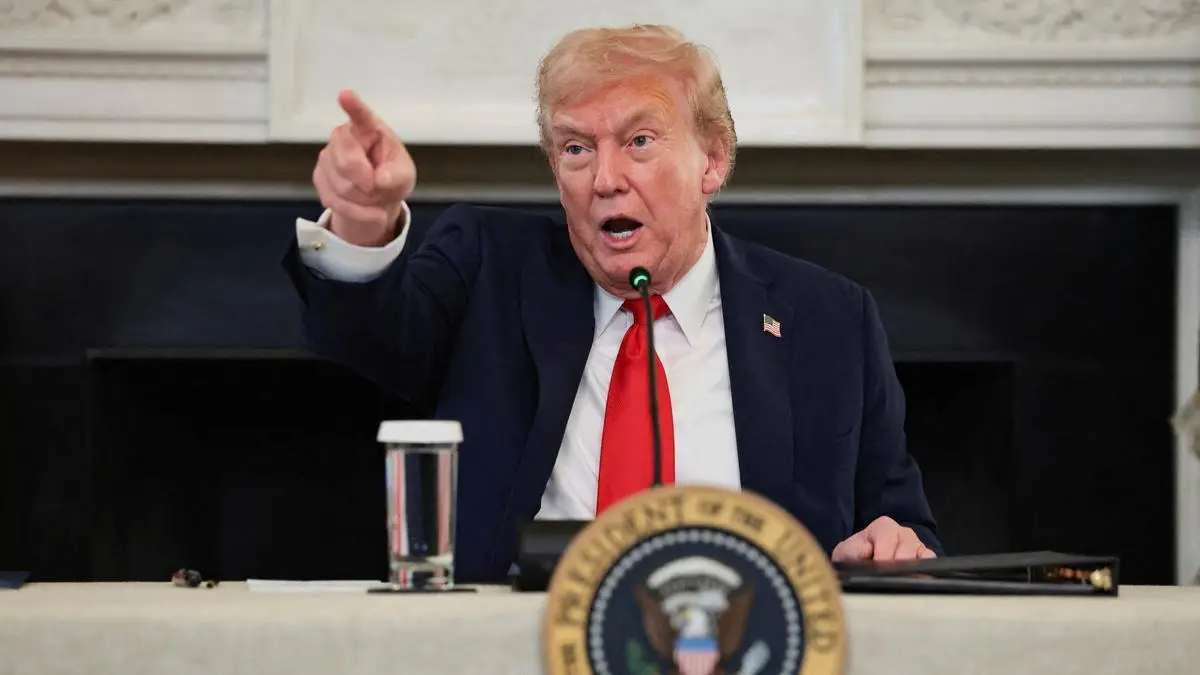
U.S. President Donald Trump, his two oldest sons, Donald Trump Jr. and Eric Trump, along with the Trump Organization, have filed a $10 billion federal lawsuit against the U.S. Treasury Department and the Internal Revenue Service (IRS).
The lawsuit was filed in federal court in Miami, Florida, on January 29, 2026, alleging that the government failed to protect their confidential tax information from being leaked to the media.
According to the civil complaint, the IRS and Treasury Department “failed in their duty to safeguard and protect Plaintiffs’ confidential tax returns and related tax information from unauthorized inspection and public disclosure.”
The Trump family argues that the alleged leaks caused significant reputational and financial harm, resulted in public embarrassment, and negatively affected the president’s standing with voters.
The lawsuit centers on disclosures of private tax records that occurred in 2019 and 2020, when a former IRS contractor, Charles Edward “Chaz” Littlejohn, provided tax documents belonging to Trump and other wealthy Americans to news organizations including ProPublica and The New York Times.
Littlejohn, admitted in 2023 to illegally disclosing private tax information and was sentenced to five years in prison in 2024. Government documents state that Littlejohn leaked the tax returns of Trump and hundreds of thousands of other taxpayers while working for a contracting firm that granted him access to sensitive IRS data.
Lawyers for the plaintiffs argue that inadequate government security measures directly enabled the disclosures and violated strict IRS confidentiality laws. The complaint also claims that the revelations influenced public perception during Trump’s 2020 reelection campaign.
The lawsuit follows administrative action against Littlejohn’s employer, a consulting firm whose contracts were terminated by the Treasury Department for failing to safeguard sensitive taxpayer data.
So far, legal experts have noted that it is rare and potentially unprecedented for a sitting president to sue federal agencies within his own administration. Whether the government will seek a settlement or contest the lawsuit in court remains unclear.