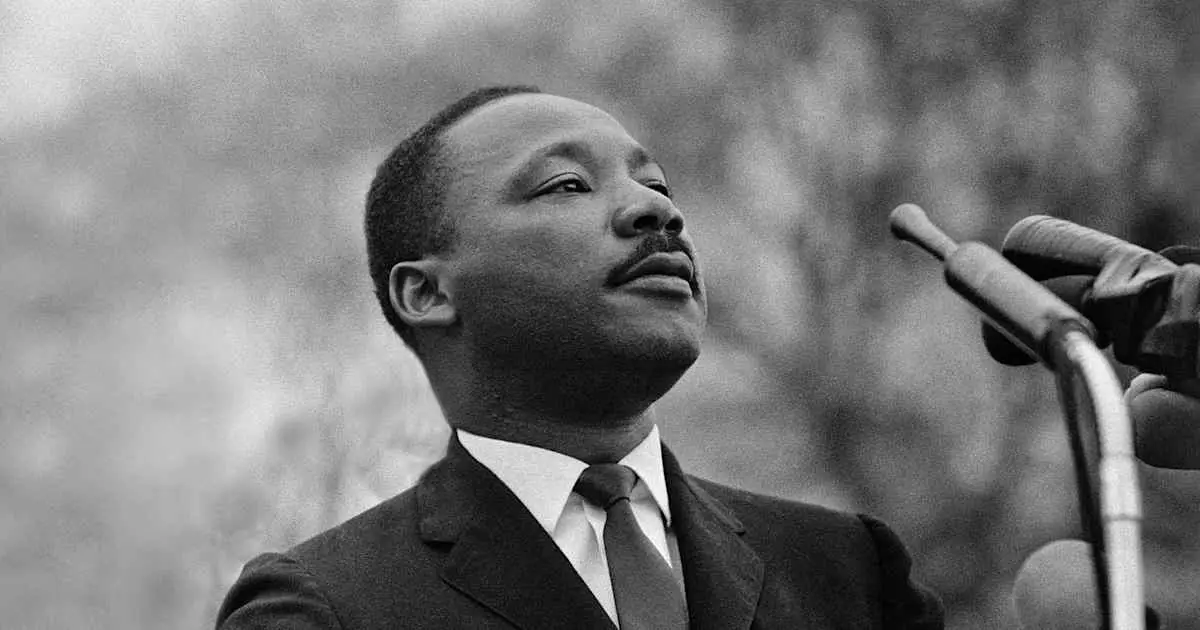
In October 1967, Dr. Martin Luther King Jr. gave one of his most powerful speeches titled “What Is Your Life’s Blueprint?” to students at Barratt Junior High School in Philadelphia. This was just six months before his assassination.
In this moment, King summarized a lifetime of success into three key principles that still resonate today.
1. Believe in Your Dignity, Worth, and “Somebodyness”
King’s first principle was both bold and affirming: a strong, unwavering belief in one’s own dignity, worth, and somebodyness.
At a time when racial segregation and discrimination plagued the United States, his message was revolutionary not because it was new, but because it was crucial. King encouraged young people, especially Black youth, to reject feelings of inferiority and see their inherent value.
Scholars later interpreted “somebodyness” as King’s term for the belief that everyone matters and that each life has deep significance.
This principle was not just inspiring words; it reflected King’s own philosophy that self-worth enables individuals to stand up against injustice and strive for greatness.
2. Pursue Excellence with Unwavering Determination
King’s second principle combined ambition with commitment. Drawing from his own disciplined life, he insisted that pursuing excellence was not optional; it was necessary.
“Secondly, you must have the determination to achieve excellence… Set out to do it as if God Almighty called you at this particular moment in history to do it… Do that job so well that the living, the dead, or the unborn couldn’t do it any better.”
This principle went beyond just professional success. King’s message highlighted an ethic of mastery that shaped a person’s contribution to society.
His philosophy went beyond excellence to an unyielding drive forward. He urged people to keep moving ahead, no matter the challenges:
“If you can’t fly, run. If you can’t run, walk. If you can’t walk, crawl. But by all means, keep moving.”
This metaphor goes beyond physical movement; it serves as a reminder to persevere through adversity. This is a hallmark of King’s leadership and legacy.
3. Commit to Beauty, Love, and Justice
The third foundation of King’s success blueprint was moral, not material. “Finally, in your life’s blueprint must be commitment to the eternal principles of beauty, love, and justice.”
This set of values reflects the heart of King’s philosophy: life and our work must be rooted in values that uplift humanity. Instead of embracing messages of destruction or despair, King expressed a transformative vision.
“Our slogan must not be ‘burn baby burn.’ It must be ‘build baby build.’ Organize, baby organize; learn baby learn so that we can earn baby earn.”
Here, King denounced violence and cynicism and urged community building. His focus on beauty demonstrates his comprehensive view of success. This is that achievement must have meaning and be grounded in morality.
Legacy Beyond the Blueprint
What makes Dr. King’s three principles timeless is their universality is that they offer guidance for both personal and collective success.
In a world facing division, King’s blueprint encourages each of us to develop self-worth, strive for excellence with conviction, and ground our actions in love and justice.
As he reminded the students of Philadelphia, and through them, the world, true success is not measured merely by awards or wealth. It is measured by the quality of one’s character and the positive impact one has on the lives of others.