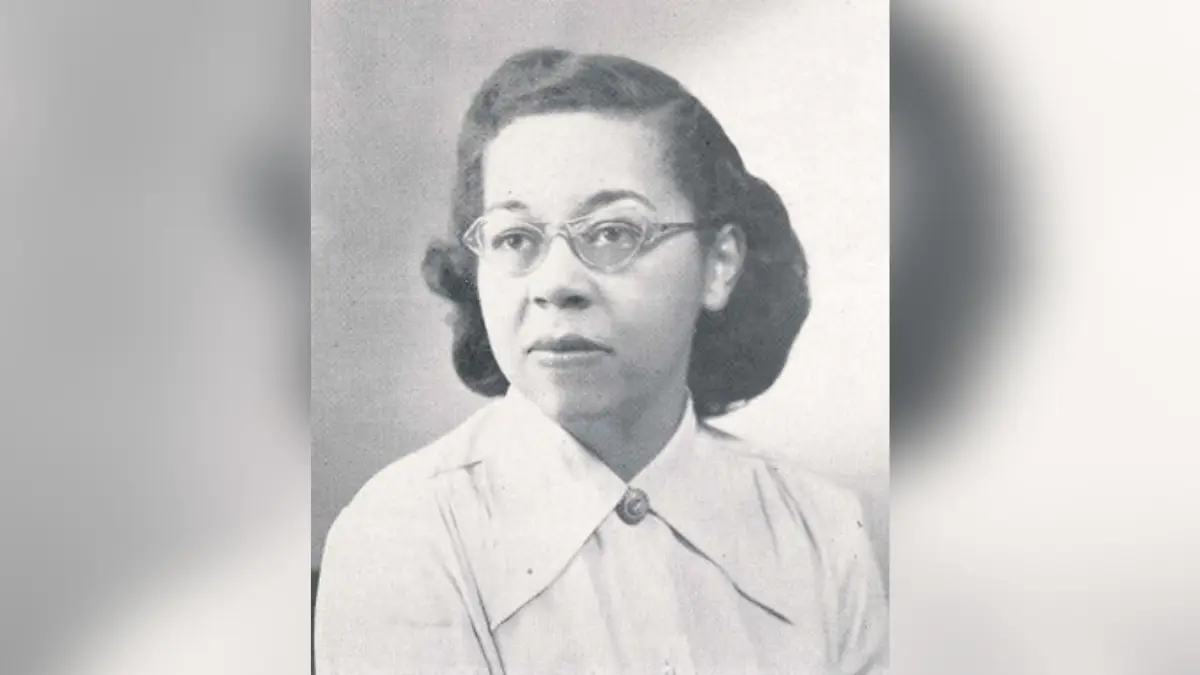
In the history of microbiology and veterinary science, few names have had a quiet but lasting influence as Dr. Jane Hinton. While her name might not be familiar outside scientific circles, Hinton’s work changed how doctors worldwide determine if bacteria are sensitive to antibiotics. This process is crucial in combating infectious diseases today.
Jane Hinton was born on May 1, 1919, in Canton, Massachusetts. She grew up in a home filled with scientific achievements.
Her father, Dr. William Augustus Hinton, was a well-known bacteriologist and pathologist. He was also the first African American professor at Harvard University. His groundbreaking work on blood testing for syphilis changed disease diagnosis and established a strong scientific legacy that his daughter would carry on.
A Formative Path
Hinton got her education in Europe during her early years and later in the United States. She excelled in her studies and graduated from Simmons College in 1939 with a bachelor’s degree. This was a significant accomplishment for a Black woman at a time when racial and gender biases greatly restricted access to STEM fields.
Soon after graduating, Hinton joined the Department of Bacteriology and Immunology at Harvard University. There, she worked with microbiologist John Howard Mueller. In 1941, they co-developed what became one of the most important tools in clinical microbiology: Mueller–Hinton agar.
This specially designed culture medium was initially created to grow Neisseria bacteria, which cause infections like gonorrhea and meningitis. It turned out to be the perfect environment for assessing bacterial growth and antibiotic sensitivity.
Unlike many media of its time, the addition of starch absorbed bacterial toxins, which could disrupt antibiotic testing, making results more reliable.
Beyond the Laboratory
When the United States entered World War II, Hinton worked as a medical laboratory technician with the U.S. War Department in Arizona. Her skills helped protect the health of soldiers. After the war, she focused on veterinary medicine and enrolled at the University of Pennsylvania School of Veterinary Medicine.
In 1949, she became one of the first two African American women in the nation to earn a Doctor of Veterinary Medicine (VMD) degree.
Her shift from laboratory science to animal health did not lessen her impact. Hinton worked as a small animal veterinarian in Massachusetts and later served as a federal inspector with the U.S. Department of Agriculture, investigating disease outbreaks in livestock. These roles demonstrated her dedication to public and animal health.
A Legacy in Every Petri Dish
The adoption of Mueller–Hinton agar as the standard for antibiotic sensitivity testing, particularly through the Kirby-Bauer disk diffusion method, ensured that Hinton’s contribution would extend far beyond her life. Today, clinical labs worldwide rely on this medium to guide antibiotic use, shape public health strategies, and monitor rising resistance.
Dr. Hinton retired in 1960 and passed away on April 9, 2003. However, her work still saves lives and pushes science forward.
In a century filled with significant changes in medicine, Dr. Jane Hinton is a testament to the vital contributions of Black women in science. These pioneers quietly support the therapies and public health measures we often take for granted today.
For more on Dr. Hinton’s archival papers, see the Jane Hinton and Jones family papers at the University of Pennsylvania’s Kislak Center for Special Collections.