

Black Business Leaders Push Back on DEI Rollbacks at Bloomberg Roundtable in Washington

Share
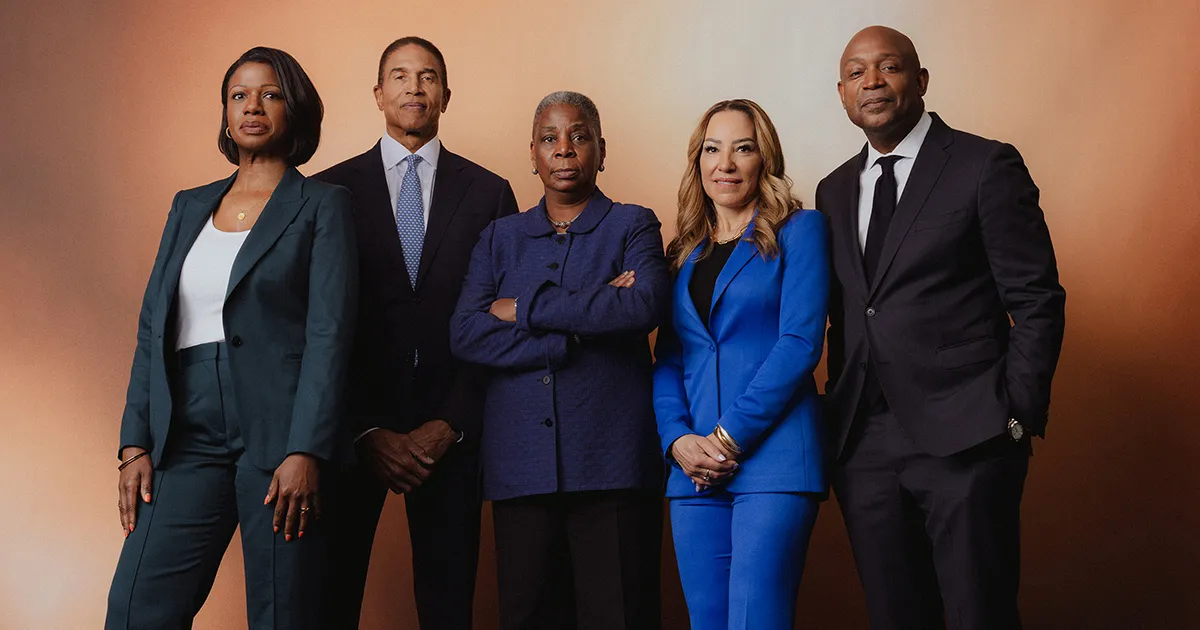
At a roundtable convened by Bloomberg Businessweek, prominent Black business leaders gathered to discuss the growing backlash against diversity, equity, and inclusion (DEI) initiatives and its implications for economic opportunity.
A key takeaway was that the reduction of DEI is not merely symbolic; it has real economic impacts. The forum gathered executives, investors, and policy makers to discuss how recent federal actions and changing corporate priorities are affecting access to capital, contracting opportunities, and leadership roles for Black professionals and entrepreneurs.
“We have an administration that is bullying corporate America,” a participant in the Bloomberg Businessweek roundtable said, reflecting concerns about growing pressure on companies to cut back DEI commitments.
A Critical Moment for Black Economic Progress
For many participants, this moment is more than just a policy change; it marks a possible reversal of slow gains made over the last ten years.
Groups like the Black Economic Alliance have long pushed for increasing Black wealth through fair access to capital, entrepreneurship, and federal contracts. Yet gaps still exist. Black-owned businesses continue to receive a disproportionately small share of federal contracts, revealing structural issues that DEI efforts aimed, though only partially, at addressing.
With these frameworks now being questioned, business leaders caution that progress may either stall or decline.
Corporate Cutbacks and Their Effects
Throughout corporate America, companies are reevaluating their DEI commitments in light of legal challenges and political pressure. Black entrepreneurs are already feeling these changes in concrete ways, like fewer supplier diversity programs, limited funding opportunities, and reduced access to executive roles.
The impact reaches beyond individual companies. Black-owned media outlets and institutions, many of which benefitted from DEI-related partnerships and advertising, are also seeing their revenue decrease as corporate priorities shift.
From Inclusion to Ownership
Even with these challenges, Black business leaders are not backing down; they are recalibrating.
Instead of depending only on corporate DEI programs, many emphasize the importance of creating sustainable systems of economic power based on ownership, investment, and community-driven growth. The focus is now on strengthening Black-led businesses, developing internal capital networks, and establishing accountability systems that endure beyond political changes.
As a common theme from the Bloomberg roundtable highlighted, the way forward is not just about maintaining existing structures; it is about evolving beyond them.
A Broader National Reflection
The discussion around DEI has become one of the most divisive topics in American business and politics. Critics claim these programs are either unnecessary or divisive, while supporters highlight their role in addressing long-standing inequities in hiring, procurement, and investment.
For Black business leaders, the issue is still about tangible results.
They argue that DEI initiatives have served as vital entry points, opening doors that were historically locked. Their reduction risks closing off those paths at a time when broader economic inclusion is still incomplete.
The Path Forward
What emerged from the Bloomberg gathering was not just opposition but determination.
Black business leaders are increasingly crafting a new story, one that transcends reliance on institutional commitments and focuses on creating independent, resilient economic systems. The message is clear: prioritize ownership over access, strategy over symbolism, and long-term sustainability over immediate policy victories.
As the national dialogue continues, their message is both urgent and hopeful: the future of American economic growth relies not only on innovation but on measurable, lasting, and fair inclusion.
And in that future, they aim not just to participate, but to lead.