
From Activism to Strategy: Rashad Robinson’s Impact on Modern Civil Rights Leadership

Share

In an era where civil rights activism must change to address deep-rooted systemic inequalities, Rashad Robinson’s impact stands out in contemporary racial justice leadership. His journey reflects a larger shift in how social movements turn moral urgency into real power. This journey includes his early advocacy roles to his influential leadership at one of America’s foremost civil rights organizations,
Robinson was born on October 13, 1978, in Long Island, New York. He started his career focused on grassroots advocacy and media strategy before rising to national recognition. Today, he is a civil rights leader, strategist, and advisor whose work is reshaping how racial justice campaigns function in the digital era.
Building Power Beyond Protest
Robinson’s leadership approach is based on a fundamental insight: visibility and activism need to be linked to strategy to create lasting change. This idea guided him for more than ten years. He is leading Color of Change, the racial justice organization he joined as president in 2011. Under his leadership, Color of Change transformed from a small online advocacy group into a national force with millions of members. It uses digital tools to influence policy, culture, and corporate actions.
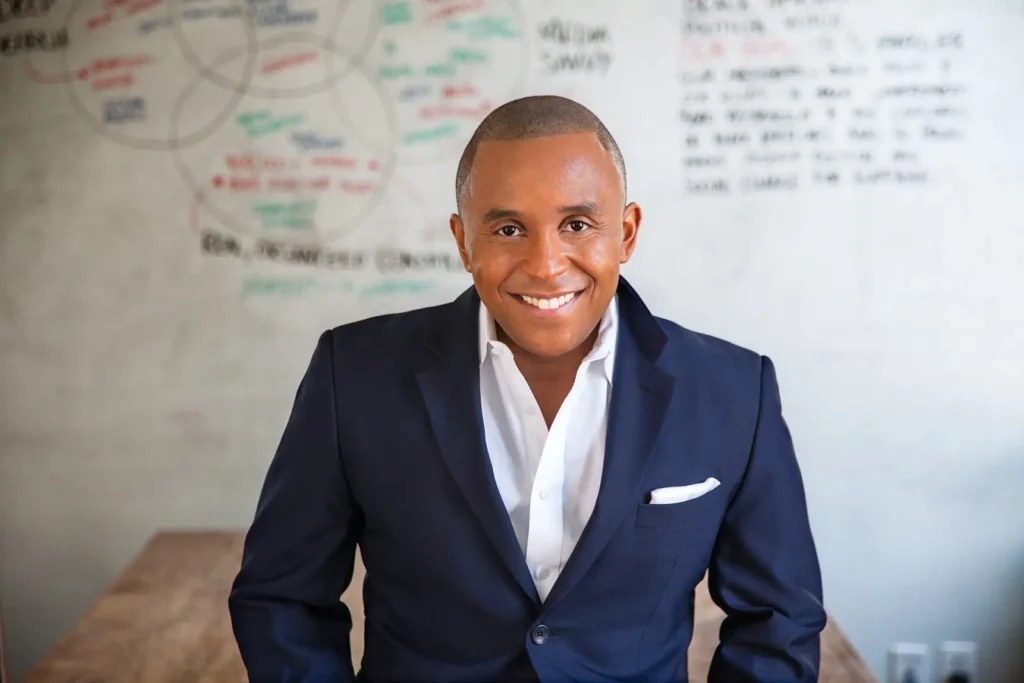
His strategic campaigns have addressed some of the most urgent civil rights issues of the 21st century. He has pushed for corporate responsibility, demanded fair media representation, fought against voter suppression, and advocated for police reform. Robinson’s focus is on changing systems rather than making symbolic gestures.
In a 2025 public forum, Robinson joined other Black leaders in challenging the notion that “visibility equals power.” He argued that strategic resistance and political imagination are necessary to withstand setbacks in civil rights protections.
Redefining Civil Rights Leadership
Robinson’s influence goes beyond advocacy to include narrative power. This is the struggle over how stories about race, justice, and authority are shared in public life. After leaving Color of Change following a labor-law ruling in 2024, he founded Rashad Robinson Advisors and launched initiatives like The Freedom Table. The Freedom table is a monthly series that enhances public understanding of democracy and Black communities.
His work highlights a change in civil rights leadership from protest-driven activism to strategic coalition building, institutional leverage, and narrative influence. Robinson believes that achieving justice requires both grassroots energy and structural power.
His upcoming book, From Presence to Power: How to Take On the Fights That Matter and Win, is set to be published in 2026. It captures this philosophy. It provides a guide for activists, organizers, and leaders seeking to turn moral urgency into lasting social change.
Legacy and Influence
Rashad Robinson’s legacy embodies the framework he provides to a new generation of civil rights leaders. He shows that justice advances through careful planning, from boardrooms to legislatures, and from digital platforms to cultural narratives.
In an age of swift social change and strong resistance to equity, Robinson’s transformation from activist to strategist illustrates the next phase of civil rights leadership. This phase combines vision with strategy, and fights for equality are pursued with precision, purpose, and strength.