

Historic First: 5 Black Surgeons Lead Johns Hopkins Trauma Team

Share
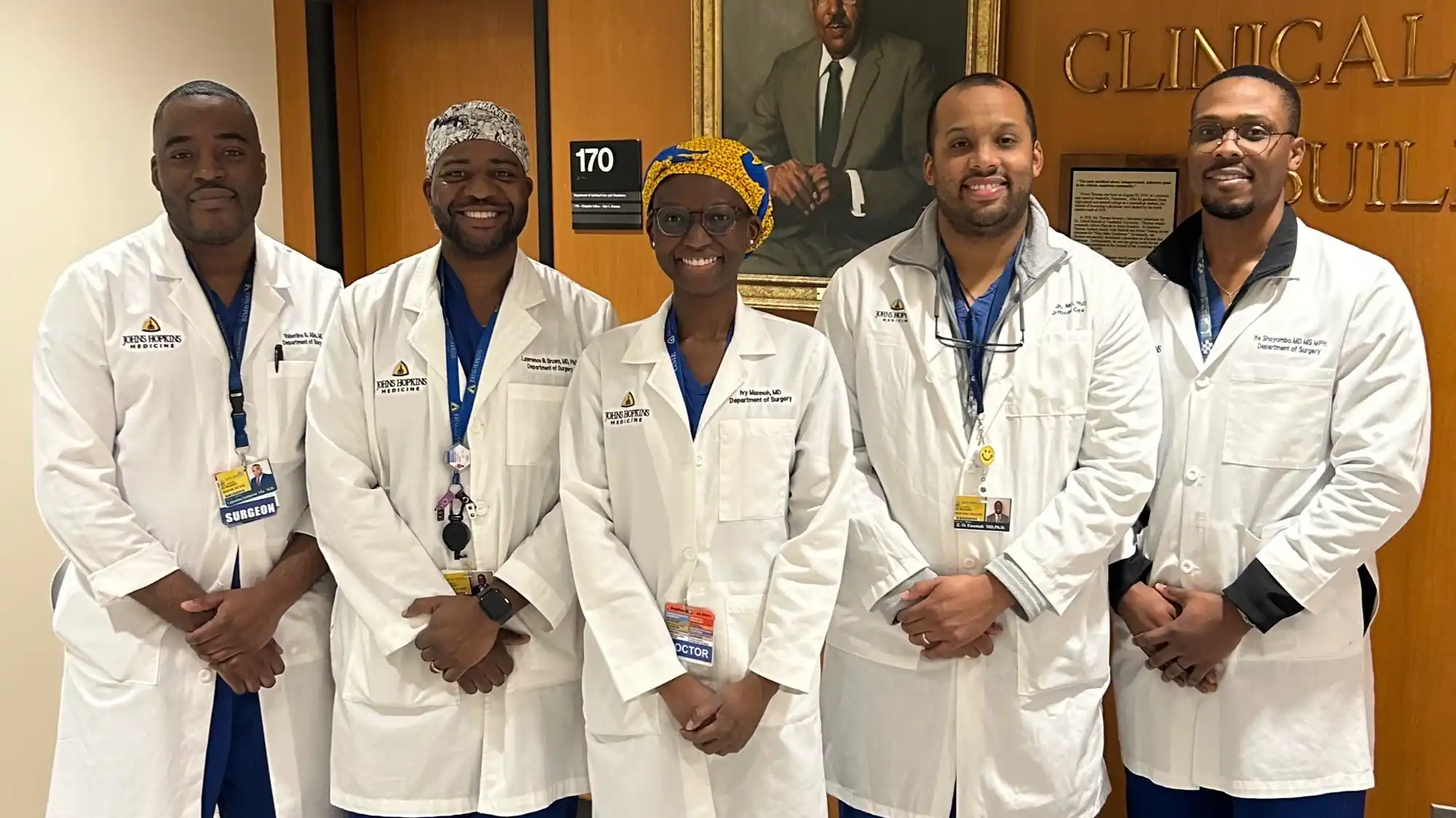
In a significant moment for American medicine, five Black trauma surgeons are now leading the Trauma and Acute Care Surgery Service at Johns Hopkins Hospital. This marks the first time in the institution’s history that an all-Black surgical team heads such an important clinical service.
The announcement was made on X in mid-February 2026 and has reached medical and civil rights communities as a symbol of overdue representation at one of the United States’ top trauma centers. For the surgeons, this achievement reflects years of hard work, teamwork, and commitment to patient care.
A Team Built on Excellence and Diversity
The Trauma and Acute Care Surgery Service at Johns Hopkins treats some of the most serious injury cases in Baltimore, a city known for high rates of violent trauma.
With this new leadership, the department continues its goal to provide life-saving care around the clock.
While specific names and backgrounds of the five surgeons, including their specialties and education, haven’t been made public, the significance of their joint leadership is recognized widely in the medical community.
Many observers highlight the importance of this moment against a history of underrepresentation in surgical subspecialties. This is especially true in trauma, where leadership roles have traditionally lacked racial diversity despite the high rates of injury in communities of color.
Legacy and Progress at Johns Hopkins
This achievement also reflects the progress of diversity at Johns Hopkins, a long-standing institution that has celebrated figures.
This includes Dr. Levi Watkins Jr., the first Black chief resident in cardiac surgery at Johns Hopkins. There is also Vivien Thomas, whose contributions to heart surgery were recognized only years after his efforts helped save many lives.
Institutional leaders view this moment as a sign of progress toward a more representative surgical workforce.
Looking Ahead
As Johns Hopkins continues to face the challenges of 21st-century health care, the prominence of its trauma surgeons represents both clinical expertise and the growing opportunities for physicians from diverse backgrounds.
For now, the five are selected through their leadership, skill, and determination. They are reshaping what leadership in academic medicine can look like.
Their success also emphasizes the importance of equity, excellence, and resilience in America’s critical surgical care.