
Jesse Jackson, Civil Rights Leader, Dies at 84

Share
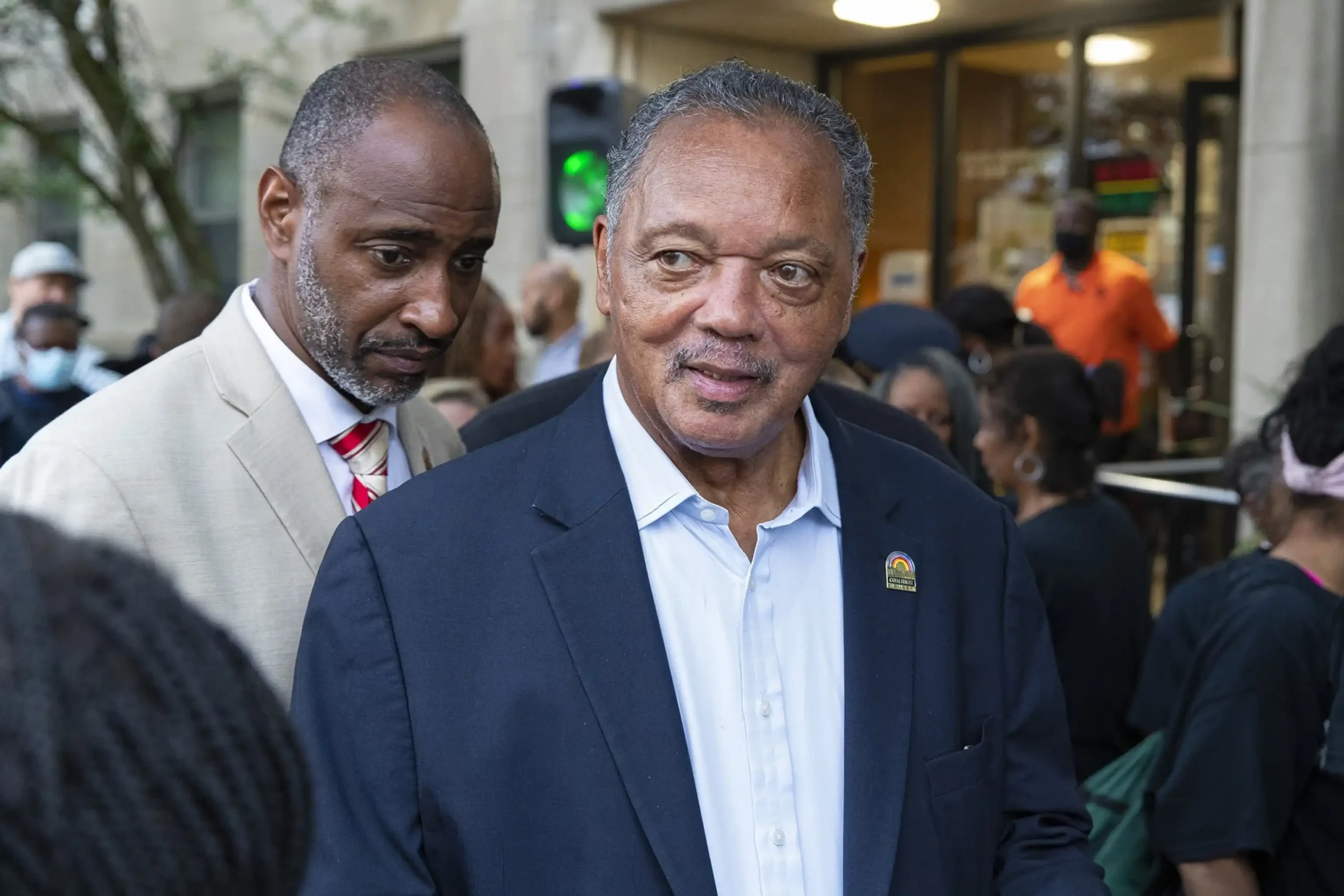
The Rev. Jesse Louis Jackson Sr., a key figure in civil rights history, died on Tuesday at 84, his family announced. According to a statement from his representatives, Jackson passed away peacefully at his home in Chicago, surrounded by family,
“We share with deep sadness the passing of the Honorable Reverend Jesse Louis Jackson Sr.,” the family stated on Instagram. “Our father was a servant leader, not just for our family, but for the oppressed, the voiceless, and the overlooked around the world… His unwavering belief in justice, equality, and love lifted millions.”
From Segregated South to Global Stage
Jackson was born on October 8, 1941, in Greenville, South Carolina. He emerged from humble beginnings in the segregated South to become a prominent voice in the fight for racial, economic, and social justice in the United States.
In the 1960s, he worked closely with the Rev. Martin Luther King Jr. He was in Memphis in April 1968, shortly before King was assassinated, a moment that greatly influenced his future direction.
Jackson took on leadership roles in the Southern Christian Leadership Conference (SCLC) early in his career. He led its economic initiative, Operation Breadbasket, which aimed to improve employment and economic conditions for Black Americans.
After leaving SCLC in 1971, he founded Operation PUSH (“People United to Save Humanity”). PUSH is a civil rights and social justice organization based in Chicago.
The body later merged to become the Rainbow/PUSH Coalition, which served as his platform for voter registration drives, campaigns for corporate accountability, and advocacy for fair education and jobs.
Historic Presidential Campaigns
In the 1980s, Jackson gained national attention as one of the first Black Americans to run competitive campaigns for the Democratic presidential nomination in 1984 and 1988.
Although he did not win his party’s nomination, his campaigns motivated millions of voters and opened doors for future Black candidates. It paved the way for historic victories.
“I am Somebody,” Jackson often repeated, a line from a poem he used to highlight the dignity and worth of every individual, especially those marginalized by society.
A Global Civil Rights Presence
Jackson’s influence went beyond American politics. Over the years, he encouraged corporate America to embrace diversity.
He used his moral authority to negotiate diplomatic solutions abroad, including securing the release of hostages in the Middle East and Eastern Europe.
In 2000, President Bill Clinton awarded Jackson the Presidential Medal of Freedom. This is the highest civilian honor in the United States, recognizing his lifetime of advocacy and leadership.
Later Years and Legacy
In recent years, Jackson faced serious health issues. He publicly revealed his diagnosis of Parkinson’s disease in 2017. He was later diagnosed with progressive supranuclear palsy, a rare neurological disorder affecting his movement and speech.
Despite these challenges, he continued to attend public events to support causes like Black Lives Matter and other civil rights initiatives, even as his health worsened.
Fellow activists expressed admiration and sadness at the news of his passing. According to reports, civil rights leader Rev. Al Sharpton called Jackson “a consequential and transformative leader who changed this nation and the world.”
Jackson is survived by his wife, Jacqueline Lavinia Jackson, his children, including former congressman Jesse Jackson Jr. and Jonathan Jackson, and his grandchildren.
A Movement’s Voice
More than just a figurehead, Jackson was known for his powerful speeches and strong commitment to a diverse coalition of justice. His rallying cries include “Keep Hope Alive” with his request that freedom without equality remains “unfinished business,” Both of which resonated through generations and movements.
In a nation still grappling with its legacy of inequality, Jesse Jackson’s life will be remembered as a testament to persistence and the ongoing fight for justice.