

Nokia Board Chair Sari Baldauf Steps Down as AI Boosts Q4 Profit

Share
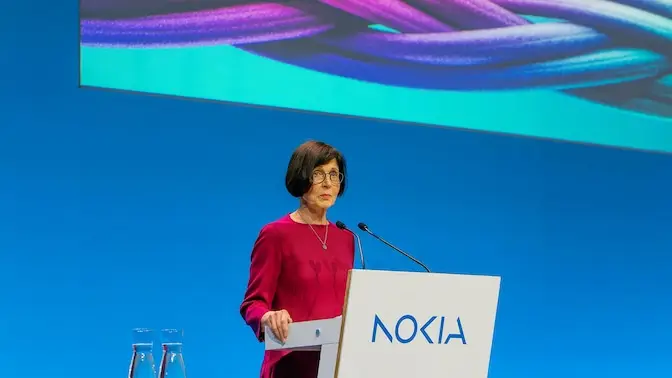
Finland’s telecom and networking company Nokia, has announced that its long‑serving board chair, Sari Baldauf, will step down later this year as the company pushes further into artificial intelligence and data‑centric technologies.
The leadership change underscores a critical moment in Nokia’s ongoing efforts to reshape its business in the face of shifting market demand.
Baldauf, one of Nokia’s most experienced executives, first joined the company in 1994 as it was becoming a global leader in mobile phones. She rejoined in 2018 and has chaired the board since 2020, guiding Nokia through multiple strategic shifts and restructuring efforts.
Under her leadership, the board has supported major organizational changes to pivot the business toward next‑generation networking technologies.
The board will formally propose Timo Ihamuotila as Baldauf’s successor at Nokia’s Annual General Meeting on 9 April 2026. She is currently the vice‑chair and a former chief financial officer of Nokia.
The proposal also includes the election of Meredith Whittaker, president of the Signal Technology Foundation, as a new board member.
Earnings Reflect Strategy Shift
Nokia’s latest results, released in January, showed that fourth-quarter earnings met analyst expectations, supported by early gains from its focus on AI and data center technology.
Nokia earned about €1.05 billion in profit from its regular business this quarter. This is slightly lower than the same quarter last year, but it matches what analysts had expected. Net sales of approximately €6.13 billion also met forecasts, bolstered by growth in key product segments.
Investors and analysts see these results as a sign that Nokia’s shift toward artificial intelligence infrastructure is beginning to support the company’s financial performance. This is particularly in optical and IP networking systems used in cloud and AI applications.
Sales in Nokia’s Network Infrastructure division grew around 7% in the quarter, with Optical Networks up about 17%, driven by strong orders from cloud and AI customers.
At the same time, part of Nokia’s business, such as Cloud and Network Services, saw declines, reflecting broader challenges in legacy telecom markets and the uneven pace of transformation across different technology areas.
Market Reaction and Challenges Ahead
Following its earnings announcement and news of Baldauf’s planned departure, Nokia’s stock fell sharply down about 6% in early trading in Helsinki.
The drop made the company one of the weakest performers on Europe’s Stoxx 600 index, as investors expressed caution about near‑term growth prospects.
Part of the concern stems from Nokia’s relatively cautious forecast for 2026, with expected operating profit guidance of €2.0 billion to €2.5 billion and the prospect of softer net sales in the first quarter as seasonal patterns and market conditions take effect.
Strategic Reorientation and Leadership Change
Nokia’s transition from traditional 5G equipment toward AI‑native networking and cloud‑infrastructure technologies represents one of the company’s most significant strategic overhauls since it exited the mobile phone business more than a decade ago.
The company has also reorganised its internal structure into two main segments, Network Infrastructure and Mobile Infrastructure in order to sharpen focus and accountability.
The appointment of Justin Hotard, a former Intel executive, as CEO last year was designed to accelerate this shift and bring fresh leadership to navigate the complex landscape of global telecoms, cloud and AI infrastructure.
Under Baldauf’s tenure, Nokia has seen both challenges and progress as it pursues its vision of becoming a key player in the AI era.
Her departure marks a turning point for the company, with industry watchers closely watching whether the new leadership can maintain momentum and deliver sustained growth in an increasingly competitive technology market.