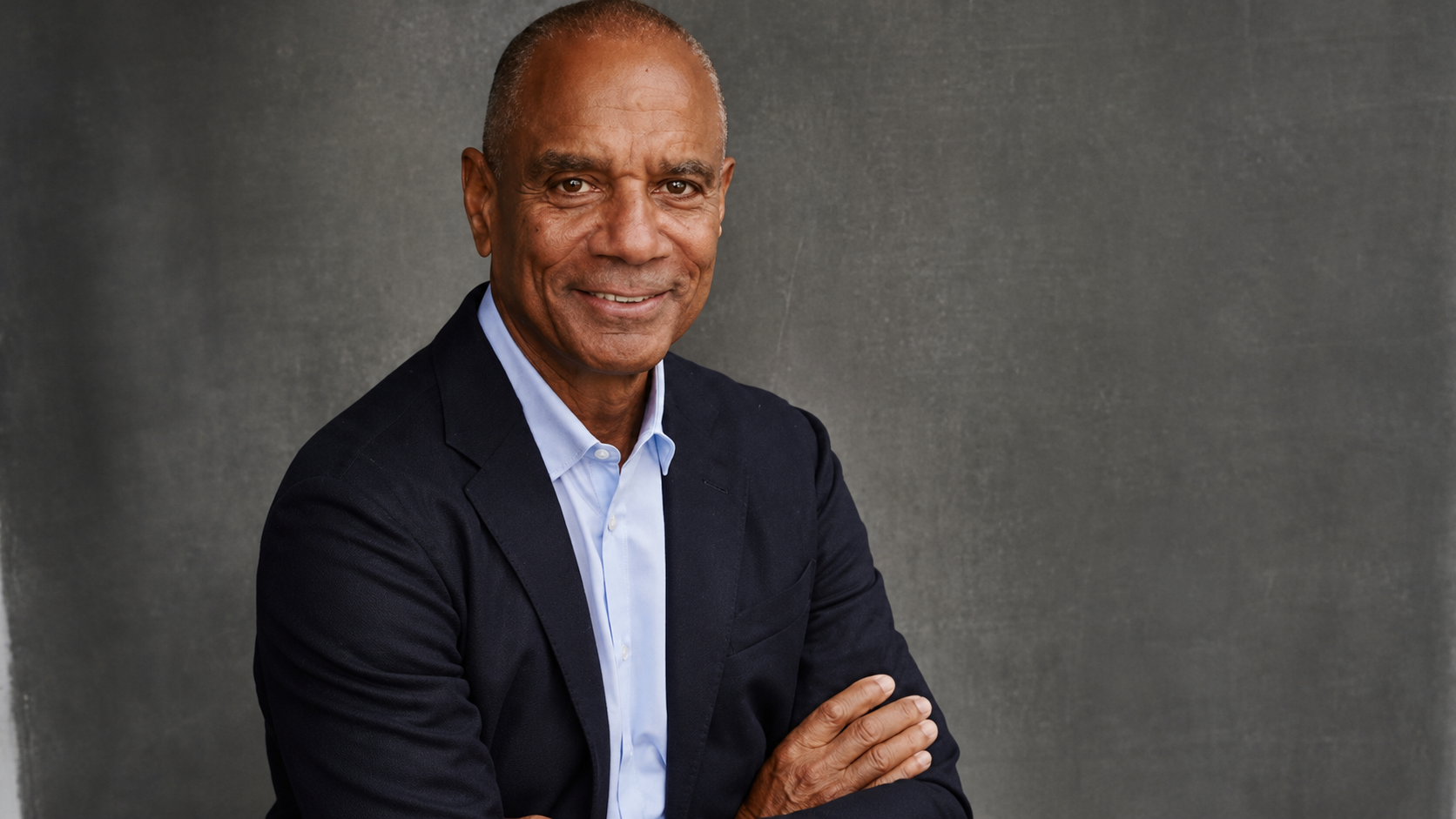
Few corporate leaders take control of a global company just months before a crisis threatens its business. Kenneth Chenault’s Leadership Journey can be traced to when he became CEO of American Express in 2001, shortly before the September 11 Terrorist attacks disrupted global travel, reduced consumer spending, and damaged the company’s New York headquarters.
Chenault felt that waiting for the market to recover would put American Express at risk. He approved a restructuring charge of up to $280 million, cut thousands of jobs, and restructured the company’s cost base to improve financial flexibility. Instead of viewing the disruption as a temporary setback, he used it to prepare the business for a long period of uncertainty.
This decision helped American Express survive one of its most severe shocks and established Kenneth Chenault’s leadership journey to include making tough decisions under pressure. After leaving the company in 2018, he joined General Catalyst as chairman and managing director. He transitioned from leading one global firm to advising and investing in new companies. Today, General Catalyst operates as an investment platform managing over $40 billion, where Chenault helps identify companies capable of becoming lasting global institutions.
The Defining Play: Cut Before the Crisis Made the Decision
American Express faced collapsing travel demand, weaker card spending, damage to its headquarters, and a slowing U.S. economy.
The restructuring required a charge of up to $280 million, affected thousands of employees, and risked lowering morale just when the company needed stability.
Chenault reduced the company’s cost base instead of assuming travel demand would quickly return. The restructuring aimed to create $230 million to $260 million in savings in 2002 and $290 million to $315 million in annual pre-tax savings by 2003.
American Express reported about $2.67 billion in net income in 2002. Chenault stayed as CEO until 2018, later guiding the company through the global financial crisis and the loss of its Costco partnership.
The key point is not that cutting costs always leads to growth. It is that Chenault changed the cost structure before management’s assumptions became more dangerous than the crisis itself.
Kenneth Chenault’s Leadership Philosophy
Build Flexibility Before Predictability Returns
When the outside environment is unclear, reduce fixed commitments and increase the organization’s range of possible responses. Chenault said, “The environment since Sept. 11 has underscored the need for us to create greater flexibility in our cost structure.”
Chenault did not wait for travel demand to return to normal. He approved a large restructuring despite the financial cost and internal disruption, creating a leaner operating base for an uncertain recovery.
Separate Fundamental Issues From Political Noise
Before taking a public position, find the underlying principle and communicate it using facts and shared values instead of ideology. At the TIME100 Summit, Chenault said leaders must communicate on “matters of truth and facts.”
In 2021, Chenault and Frazier helped gather over 700 executive signatures against legislation that could limit voting access. They framed voting as a fundamental democratic right, not a party issue.
Back Companies That Can Become Institutions
Do not judge a business only by its current product or value. Look at whether it can grow across markets, gain institutional relevance, and survive beyond its founding team. “I am most interested in identifying companies with breakout characteristics, including those that are scaling quickly and have the potential to become significant, global institutions.”
At General Catalyst, Chenault has backed companies like Bilt Rewards, Chief, CRED, and Guild Education, businesses in consumer finance, executive networks, fintech, and workforce development.
The 2008 Near-Collapse
The post-9/11 restructuring was tough, but the 2008 financial crisis revealed a deeper issue: American Express was not just a premium payments company. It was also vulnerable to consumer credit problems and disruptions in funding markets.
Its share price fell to around $10 at the crisis low. The U.S. government guaranteed up to $14 billion of its debt and invested about $3.4 billion through the Troubled Asset Relief Program. American Express became a bank holding company, which gave it access to more stable funding and government support.
The company paid back its $3.39 billion TARP investment in June 2009. However, the situation was not a complete leadership victory. American Express survived with significant public assistance, and Chenault faced criticism for receiving high compensation during this time.
The need for change was clear. Liquidity could no longer be seen as a treasury task separate from strategy. Funding stability, credit risk, and the ability to endure a shutdown in capital markets became top management concerns.
Power Network
Backers
Former American Express CEO James Robinson III was an early supporter. Chenault recalled that Robinson recognized his potential while he was still a junior executive and contacted him directly. Harvey Golub later appointed Chenault as president and chief operating officer before he became CEO.
Protégés
Chenault became a key adviser to former Merck CEO Ken Frazier. Frazier said Chenault reached out to him when he moved into Merck’s business operations because there were “unwritten rules” of corporate leadership he needed to grasp.
Strategic access
Chenault’s roles at General Catalyst and on the boards of Berkshire Hathaway, Airbnb, Harvard Corporation, and other institutions give him access to venture deals, global operators, large capital pools, and governance insights.
This network advantage is not just about prestige. It allows Chenault to connect emerging founders with the knowledge needed to transform fast-growing businesses into durable companies.
Kenneth Chenault’s Crisis-to-Capital Timeline
| Period | Pressure or platform | Quantified marker | Strategic meaning |
| 2001 | Post-9/11 travel collapse | Up to $280m restructuring charge | Cost flexibility became the immediate priority |
| 2001 | Workforce restructuring | 13,200–14,200 total job cuts | Roughly 15% of the workforce removed |
| 2008–2009 | Global financial crisis | $3.39bn in TARP capital | Brand strength could not replace funding resilience |
| 2018 | Chenault joined General Catalyst | $3.75bn under management | Shift from operating one institution to advising several |
| December 2024 | General Catalyst expansion | $33.6bn under management | Nearly ninefold firm-level increase since 2018 |
| 2025 | Broader investment platform | Reported at over $40bn | Venture capital expanded into a larger institutional platform |
Lessons: Create a Crisis Flexibility Trigger
Choose one operating metric that would indicate your business assumptions are no longer valid. It could be a 20% revenue decline, three months of cash left, customer acquisition costs exceeding lifetime value, or one client generating more than 30% of revenue.
Write down in advance the action that the metric will trigger. Chenault’s lesson is that crisis decisions become slower and more emotional when leaders wait until the threshold has been crossed to decide the rules.