When the nation faced a series of high-profile killings and systemic injustices, one lawyer stepped forward. Ben Crump transformed from a successful trial attorney to the voice of a generation eager to redefine civil rights in 21st-century America.
Benjamin L. Crump, founder and president of Ben Crump Law, is widely recognized among civil rights advocates and legal experts as the face of modern civil rights law. He earned this title through decades of courtroom battles, media engagement, and persistent work for racial justice.
From Tallahassee to the National Stage
Crump’s rise began long before the headlines of the 2020s. He graduated from Florida State University and its College of Law and built a local reputation by handling civil rights cases in Florida before national tragedies brought him into the spotlight.
Early cases established him as a brave advocate willing to challenge entrenched power structures. These include the wrongful-death suit for Trayvon Martin in 2012 and the Ferguson police shooting of Michael Brown in 2014.
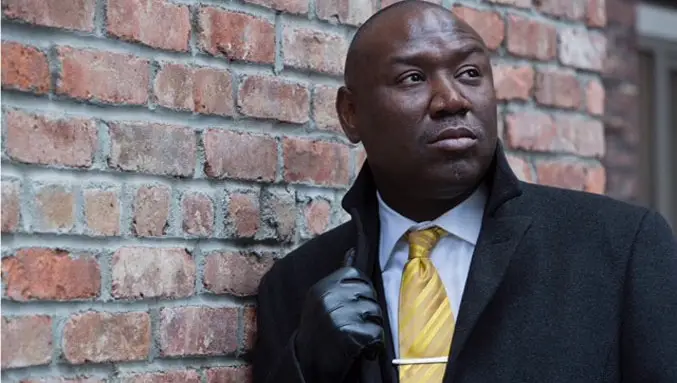
Over time, his legal work merged with public discussions. Crump increasingly used press conferences, social media, and televised interviews to highlight issues of systemic racism beyond the courtroom. Legal experts note that this modern approach has been crucial to his impact, blending traditional litigation with public opinion to seek accountability and change.
Civil Rights Cases That Defined an Era
Crump’s name is now associated with many significant moments in recent American history. In 2020, he represented the families of Ahmaud Arbery, Breonna Taylor, George Floyd, and Jacob Blake, all of which led to nationwide protests against police brutality and racial injustice.
In the Floyd case, Crump became a key figure in the legal and cultural struggle that followed the painful footage of Floyd’s death. As reported by Reuters, Crump said of his pursuit for justice, “What we’re doing is continuing to make the arguments in the court of public opinion. The court of law is not very kind to marginalized minorities.”
His advocacy helped secure a $27 million pre-trial civil settlement for Floyd’s family. This is one of the largest in U.S. history. This outcome showed the legal and strategic pressure Crump’s team applied.
Beyond police violence, his cases have included environmental justice, discriminatory banking practices, and public health inequities.
Recognition, Reach and Impact
Crump’s rise has been more than symbolic. In 2021, TIME Magazine named him one of the world’s 100 most influential people. He was the only personal injury attorney on the list that year. U.S. Rep. Maxine Waters stated, “He is not only having an impact on the culture, but his advocacy is influencing corporate boardrooms and the highest levels of government.”
The National Newspaper Publishers Association recently named him the Top Black Newsmaker of the 21st Century. It noted that his name has appeared more frequently in major Black-owned media than any other Black American over 25 years.
In 2024, Forbes recognized Crump as one of America’s Top 200 Lawyers, acknowledging both his legal skill and cultural importance.
Beyond the Courtroom
Crump’s influence reaches into education and public conversation. He serves as president of the National Civil Rights Trial Lawyers Association and has led the National Bar Association. He also helped establish the Benjamin Crump Social Justice Institute.
In a historic first, St. Thomas University renamed its College of Law in his honor. It is the only U.S. law school named after a currently practicing African American attorney.
His writings, including the book Open Season: Legalized Genocide of Colored People, have expanded his platform, allowing him to present civil rights issues to an audience far beyond the courtroom.
A Movement, Not a Moment
Crump often describes his work as bigger than one person or one firm. He told TIME that his fight seeks not just monetary justice but systemic reform, pushing to ensure that the law values Black lives.
Legal experts and civil rights advocates argue that his dual role as a legal strategist and a public voice is what truly sets Crump apart. He has become less a traditional lawyer and more a national representative of civil rights issues, guiding families and communities toward legal solutions.
The Legacy in Progress
Critics sometimes question the attention his practice receives. Yet even detractors acknowledge one fact: when the nation tries to reconcile its ideals with its reality, Ben Crump is often one of the first names mentioned.
In an era where civil rights law must confront both long-standing inequalities and newly visible injustices, Crump’s career serves as a model for how advocacy, media strategy, and legal determination can change national awareness.
As new cases continue to arise, so does the role of the lawyer who has, for now, become the clear face of modern civil rights law.