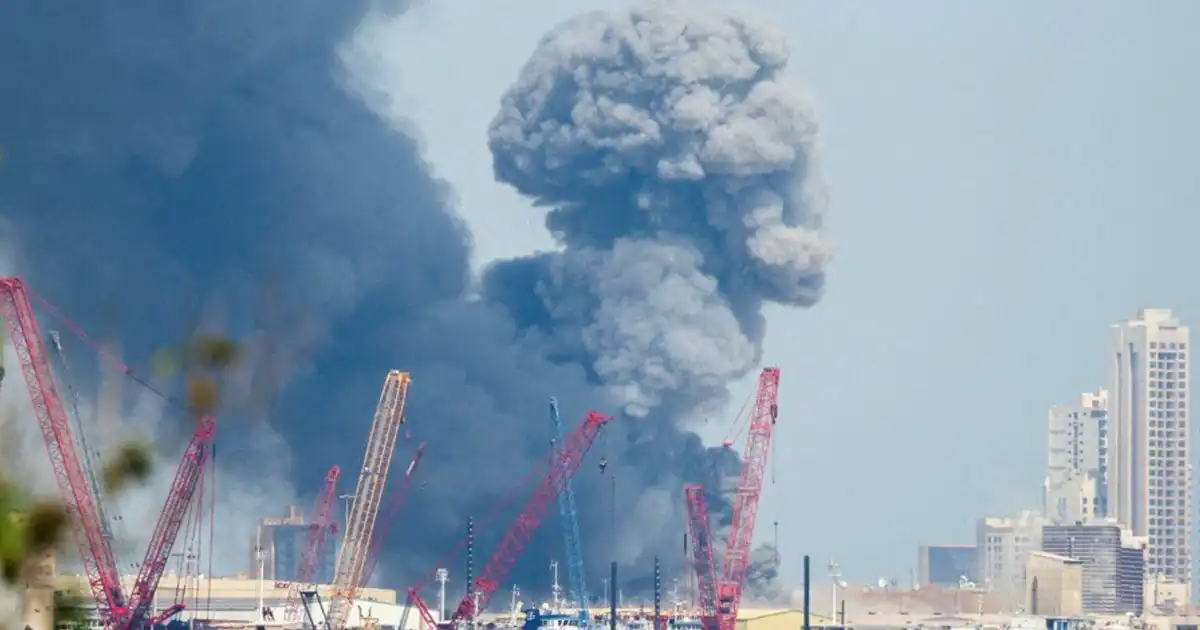
According to reports, a wave of military tension swept across the Middle East on Wednesday, as Iran’s drones aimed at a United States military installation in Iraq was intercepted. Reports of explosions were over Doha, Qatar’s capital, marking a significant escalation in the region’s conflict.
U.S. officials have not publicly confirmed any damage or casualties from the attack. However, this incident adds to a series of hostile encounters in recent days. This was in response to the large military campaign the U.S. and Israel launched against Iranian territory earlier this week.
In Doha, residents reported multiple explosions and the sound of intercepted projectiles overhead. It disrupted life in the usually calm capital of Qatar.
Qatar’s Ministry of Defence confirmed that its air defenses were intercepting a barrage of missiles and drones. These drones and missiles links to Iran’s broader campaign of retaliatory strikes. Many of the missiles and drones were reportedly neutralized before impact. However, falling debris has led to precautionary evacuations, including around the U.S. Embassy in Doha.
The attempted drone strike near Baghdad occurs during what officials describe as the most intense phase of a growing confrontation that involves Gulf states hosting U.S. military assets. Since late last week, Tehran has launched hundreds of drones and missiles toward locations across the region.
They include bases in Kuwait, Bahrain, and northern Iraq, according to statements from Iran’s Islamic Revolutionary Guard Corps (IRGC).
Iranian officials have described their recent missile and drone strikes as defensive reactions to U.S. and Israeli military actions, framing them as forced responses to foreign aggression after diplomatic efforts failed.
According to reports, Iranian President Masoud Pezeshkian said in posts on X that Tehran had sought to avert war through diplomacy but was compelled to defend itself after what he termed “American‑Israeli military aggression,” adding that Iran respected the sovereignty of neighboring countries and had “no choice” but to respond.
Gulf Arab states have also taken action. Qatar, the United Arab Emirates, Saudi Arabia, and Bahrain have reported intercepting missiles or drones in recent days. In some cases, debris strikes on infrastructure caused minor fires. This has led to temporary shutdowns of facilities like oil storage tanks or logistics hubs.
The increase in military engagement has strained diplomatic relations. Qatar publicly rejected Iranian claims that it aimed it strikes solely at U.S. interests and not at Qatari territory.
Iran’s foreign minister made this claim during discussions with Qatari officials. Doha called such attacks violations of its sovereignty and reiterated calls for an immediate end to hostilities.
In Baghdad, Iraqi Prime Minister Mohammed Shia al-Sudani has urged local security forces to prevent destabilizing actions within Iraq. He stressed Baghdad’s desire to avoid becoming a battlefield between foreign powers while managing conflicting interests from powerful militias.
The conflict is entering its sixth day. Regional analysts warn that the ongoing drone and missile strikes risk involving additional players and escalating tensions further. The United States has placed more of its regional forces on high alert and repeated its commitment to protect personnel and assets.