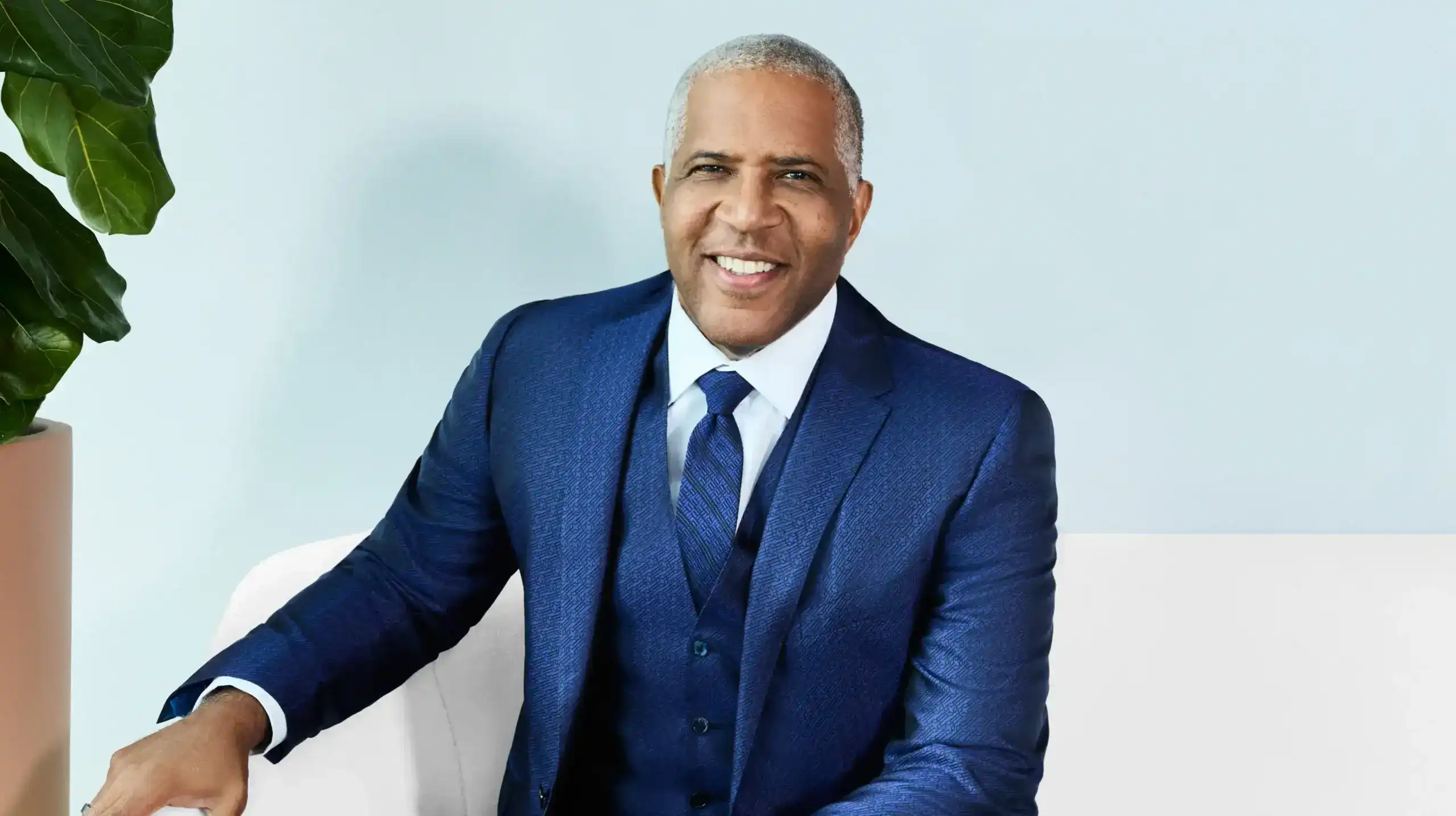
In the realm of global technology investment and transformative philanthropy, few figures are as prominent or inspiring as Robert F. Smith. He is the founder, chairman, and CEO of Vista Equity Partners. He plays a key role in promoting Black excellence in business, education, and civic life.
Smith rose from humble beginnings in Denver, Colorado, to the top of private equity and philanthropy. This highlights his commitment to helping communities that have historically faced limited access to opportunity. Smith was born on December 1, 1962, to a middle-class family in a Black neighborhood in Denver. His parents both have doctoral degrees in education.
They instilled in him the importance of learning and service. Their commitment to helping others shaped his perspective: “Potential is no guarantee of progress. We will only grasp the staggering potential of our time if we create onramps that empower ALL people to participate,” Smith reflected. This belief in pairing individual success with collective improvement has guided him throughout his life.
Smith’s academic path was both impressive and aspirational. He earned a B.S. in chemical engineering from Cornell University. He went on to earn an MBA from Columbia Business School. Smith then entered investment banking at Goldman Sachs. He focused on technology mergers and acquisitions.
In 2000, he combined his analytical skills and financial knowledge to start Vista Equity Partners. This is a firm dedicated to investing in enterprise software companies. Under his leadership, Vista has become a major player in technology private equity. It manages nearly $100 billion in assets and has completed many strategic deals that have transformed the industry.
However, Smith’s impact goes well beyond financial success. In a moment that garnered global attention and changed modern philanthropy, he stood before the 2019 graduating class of Morehouse College, a historically Black men’s institution, and pledged to eliminate the student loan debt of the entire class.
The crowd erupted in cheers when he announced that his gift would also cover the debt held by students’ guardians. This gesture resonated deeply with families and highlighted the importance of opportunity free from financial burdens.
“That gift was an investment in promise,” Smith later said about his commitment. It also sparked his leadership of the Student Freedom Initiative, a nonprofit that addresses systemic challenges in college finance and expands pathways for students, especially those studying STEM at Historically Black Colleges and Universities (HBCUs), Minority-Serving Institutions (MSIs), and Tribal Colleges and Universities (TCUs).
Smith’s philanthropic work is broad, thoughtful, and strategic. In 2017, he became the first Black American to sign the Giving Pledge. He promised to donate the majority of his wealth to charity during his lifetime. His Fund II Foundation supports various initiatives, including preserving Black cultural heritage, promoting environmental care, enhancing music education, and improving healthcare for underserved communities.
Through significant donations to institutions like Cornell University and Columbia Business School, he has funded scholarships and created opportunities that increase access to in-demand technical fields.
His contributions also extend to cultural institutions. A landmark $20 million donation to the Smithsonian National Museum of African American History and Culture established the Robert Frederick Smith Explore Your Family History Center.
It is noted as one of the largest individual donations in the museum’s history. He also serves as Chairman of Carnegie Hall, further demonstrating his commitment to broadening access to art and education.
Smith’s leadership has complexities. In 2020, he reached a tax settlement with the U.S. government to resolve past tax issues without facing criminal charges, part of a broader investigation into practices involving associates in the tech industry. Despite this chapter, his entrepreneurial and philanthropic efforts continued to thrive.
Today, Robert F. Smith is one of the most influential voices in business and public life. His professional achievements in tech investment align with his belief that success should have a social purpose. His example of building generational wealth, committing that wealth to the greater good, and advocating for systemic change continues to inspire emerging leaders across various fields.
In a time when barriers to equity are still significant, Robert F. Smith’s life work powerfully affirms that excellence is not just an individual accomplishment, but a shared responsibility.