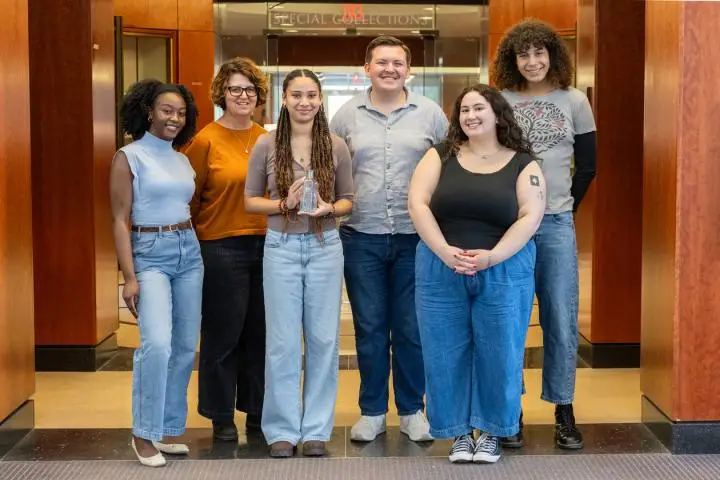
A group of university students in the United States is working to incorporate the overlooked Black women’s voices into the historical record. They are using a digital humanities project to preserve and publish personal diaries from the 19th and early 20th centuries.
According to reports, the initiative is called the Black Women’s Diaries Project (BWDP). It is led by Jennifer Putzi, a professor of English and Gender, Sexuality and Women’s Studies at William & Mary. It involves librarians and scholars collaborating across different institutions. The focus is on transcribing, annotating, and digitally encoding diaries written by African American women. Many of these date back to the Reconstruction era after the U.S. Civil War.
Researchers aim to shed light on the everyday lives of Black women during a time of major political and social change in the United States. The Reconstruction period began after the abolition of slavery in 1865. It changed American society but left many personal experiences, especially those of Black women, largely missing from mainstream historical accounts.
Unearthing overlooked voices
At the heart of the initiative is a team of undergraduate students who use archival research and digital technology to decode and interpret handwritten diaries. Their tasks include transcribing delicate manuscripts, researching historical details, and creating an interactive online platform where both researchers and the public can explore these documents.
“There’s no project quite like this,” Putzi said of the effort, noting that most digital collections of historical writings focus on letters rather than diaries. “We’re adapting code, inventing workflows and learning together.”
The website is expected to launch publicly in October 2026. It will initially feature about a dozen diaries written by Black women from the late 19th and early 20th centuries. The first diary to be released is that of Florence Barber, a resident of Norfolk who chronicled her daily life in 1902.
Students involved in the project describe how working with these documents creates a deep emotional connection to history that is often absent from textbooks.
“It was pocket-sized — something she traveled with,” said student researcher Ziz Kilmer, recalling the moment she first held Barber’s diary in the archives. “Holding it, I got emotional.”
Diaries as windows into Reconstruction
Historians view diaries as some of the most revealing primary sources because they capture everyday experiences in the writer’s own voice. For Black women living during Reconstruction and the following decades, such records are especially rare.
An example of this comes from the diary of Mary Virginia Montgomery. Her family was enslaved before they bought the same plantation where they once worked. Her entries from 1872 describe the changing social landscape of the post-Civil War South. It includes tensions related to Reconstruction and the beginning of the Jim Crow system.
Other diaries reveal ordinary yet significant moments of Black life, encompassing social events, travel, community networks, and local challenges. By linking diary entries to census records, newspaper archives, and historical databases, students are piecing together the broader context of these women’s lives.
Student researcher Micah Hutchings shared that the experience has altered her understanding of Black history.
“What I’ve learned is that Black history flows through every field, science, sociology, education,” Hutchings explained. “Black history is everywhere.”
Bridging humanities and technology
The project lies at the crossroads of history, literature, and digital technology. Students in Putzi’s digital humanities lab learn coding techniques needed to transform handwritten manuscripts into searchable digital texts, making the diaries available to researchers worldwide.
The initiative also involves extensive historical annotation. Researchers identify individuals mentioned in the diaries, trace family connections, and explain references to events like strikes, political discussions, and community conflicts.
For student Mia Hunt, a psychology and American studies major, the project opened doors to coding and archival research unexpectedly.
“Black women’s history is important to me, it’s my history,” Hunt said. “This has given me more knowledge.”
Preserving history for future generations
Scholars note that projects like BWDP help fill a long-standing gap in American archives. Historically, institutions preserved far fewer documents created by African Americans. These are especially women resulting in significant parts of the historical record being incomplete.
Personal diaries, however, provide a rare and intimate glimpse into daily life during the Reconstruction era. This is a time when newly free Black communities faced the challenges of political participation, economic hardships, and ongoing racial violence.
One notable historical figure is Frances Anne Rollin. She is a 19th-century writer whose diary documented Black intellectual life and engagement in politics during Reconstruction. Her writings offer scholars an early, detailed view of a Southern Black woman navigating literary and political circles after the Civil War.
By digitizing similar personal writings, the BWDP team hopes to ensure these voices remain part of history.
As Putzi emphasized, the diaries show more than just political milestones; they capture the essence of everyday Black life.
“These writings,” she noted, “show a record you might not otherwise see.”
A living archive of Black women’s lives
When the project launches to the public, historians and students will be able to read the diaries page by page or search entries to find themes like family life, activism, education, and faith.
For the students building this archive, the work goes beyond academic research. It is about restoring voices to the historical record.
As Hunt reflected, the project has transformed her perspective on scholarship itself.
“This is research that feels alive,” she said.