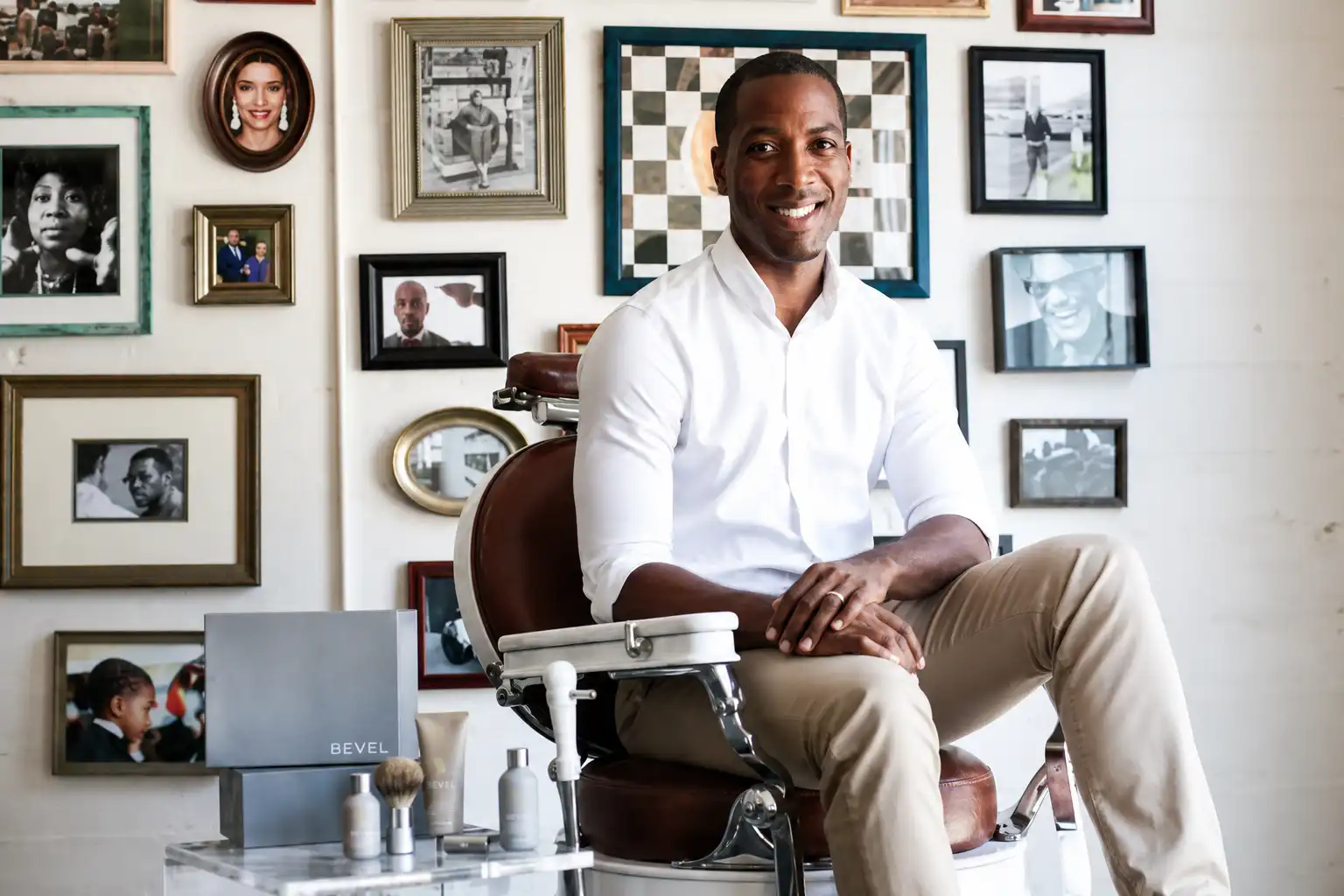
Tristan Walker did not create Walker & Company because the world needed another razor brand. He built it because one of the largest consumer markets in America was being overlooked.
For years, Black men with coarse or curly hair went into grooming aisles and found products that rarely addressed their real shaving issues. Razor bumps, irritation, and poor product design were seen as personal problems instead of a significant gap in the market. Walker recognized a deeper issue: a consumer challenge hiding in plain sight.
That realization led to Walker & Company Brands, the parent company of Bevel. This grooming line is designed to serve people of color with respect, precision, and cultural understanding.
Why Was Walker & Company Groundbreaking?
Walker & Company became groundbreaking because it transformed lived experiences into a consumer brand that could grow. Instead of asking people of color to adjust to products made for others, Walker developed products specifically for them from the beginning.
He started the company in 2013 after working at Foursquare and Andreessen Horowitz. He studied economics at Stony Brook University and earned an MBA from Stanford Graduate School of Business. Tristan worked in tech and learned how Silicon Valley companies turned ideas into products that shape culture.
A Personal Issue Becomes a Business
Bevel originated from a personal frustration. Walker faced shaving irritation for years, a common challenge for many Black men and others with coarse or curly hair. In a 2022 interview with CO-, by the U.S. Chamber of Commerce, Walker referred to the experience of waking up without razor bumps as a “moment of truth.”
That moment inspired Bevel’s first product: a shaving system built around a single-blade razor aimed at reducing irritation instead of causing more. The idea was straightforward, but its impact was significant. Walker was not just selling grooming tools. He was confronting an industry that had long considered Black grooming a secondary concern.
His approach centered on authenticity. “Entrepreneurship is hard enough,” Walker told CO-, explaining that building from a genuine place made the work more focused.
Building a Brand Around Community, Not Just Products
Walker’s main advantage was not only product design. It was his close connection to the customer.
Bevel listened to its community through direct feedback, weekly emails, and customer service interactions. Walker personally read customer comments, a practice that eventually helped him discover one of the company’s biggest opportunities. According to CO-, two strong customer reviews came from Target email addresses. Walker followed up, and within three months, Bevel was available on Target shelves.
This move was important because it transformed Bevel from a direct-to-consumer startup into a national retail brand. It also showed that products made for Black consumers could confidently sit in mainstream retail, rather than being tucked away in a forgotten corner.
The company later expanded beyond shaving into broader grooming and personal care. As of 2026, Bevel’s official site features product categories across shaving, hair and beard care, body and skin care, grooming tools, kits, and regimens, illustrating how the brand grew from a razor solution into a complete personal-care platform.
The P&G Deal That Changed Everything
A key moment for the business occurred in December 2018, when Procter & Gamble acquired Walker & Company. While the financial details were not disclosed, TechCrunch noted that Walker & Company had raised over $33.3 million from investors, including Andreessen Horowitz, Google Ventures, and others.
P&G stated that the acquisition would help it “better serve consumers of color,” while Walker said the deal provided the company with access to P&G’s technology, capabilities, and scale.
The deal represented more than just an exit. It signaled a cultural shift. Walker & Company became a fully owned subsidiary of P&G, with Walker remaining CEO at that time and the team relocating to Atlanta. TechCrunch reported that the team had 15 members at the time of the acquisition.
For Walker, choosing Atlanta was not merely a decision about headquarters. It was a statement about being close to culture and community. He told Fast Company, “This is not about me,” describing the move as one made for the company and the people it served.
Why the Brand Still Matters in 2026
Walker & Company’s story remains significant because it demonstrated how inclusion can serve as a business strategy rather than just a slogan. The company didn’t ask the beauty and grooming industry for permission to properly serve Black consumers. It built proof of concept, earned community support, entered major retail, secured venture capital, and eventually joined one of the biggest consumer goods companies in the world.
Walker’s career has also evolved beyond the company. As of 2026, he serves on the board of Shake Shack, founded Heirloom Management Co., and is well-known for his work in brand strategy, consumer culture, and entrepreneurship. Shake Shack also notes that he served on Foot Locker’s board from 2020 to 2025 and founded CODE2040, a program connecting Black and Latino technical talent with opportunities in Silicon Valley.
A Model for Future Founders
The lesson from Walker & Company is not simply that small markets can grow into large ones. It’s that many so-called “niche” consumers were never actually niche; they were underserved.
Walker knew that Black consumers did not need brands to “include” them later. They needed brands designed with them in mind from the very start, during the first product sketch, the first package design, the first customer email, and the first retail pitch.
That is why Walker & Company stands as a landmark case in modern consumer entrepreneurship. It showed that deeply respecting culture can become strategy. It demonstrated that personal frustration can lead to product innovation. And it proved that a founder from Queens could take a problem from the bathroom mirror to major retail shelves and into Procter & Gamble’s portfolio.
Tristan Walker built more than just a grooming company. He created a reminder that the future of consumer brands belongs to founders who know exactly who they are serving and why those customers deserve better.