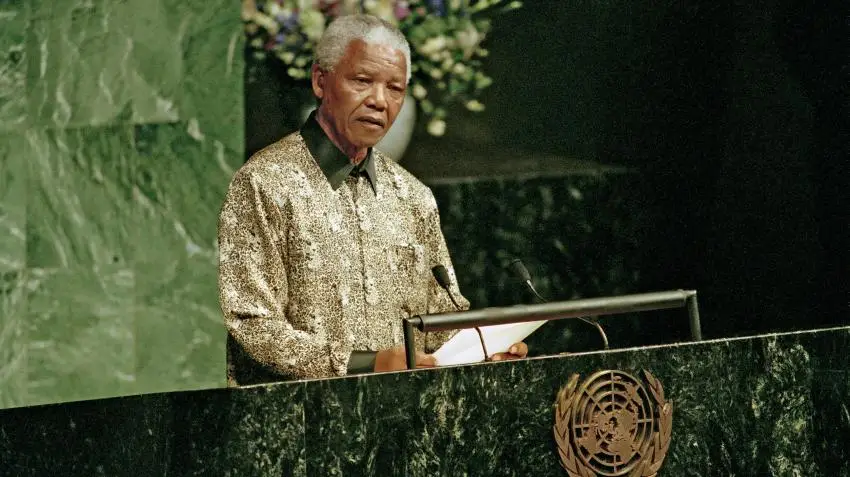
In a move that combines financial innovation with a commitment to social justice, Nelson Mandela’s vision of economic equality has inspired the launch of the Mandela Dollar (MUSD). This new stablecoin, pegged to the U.S. dollar, aims to improve financial access for underserved populations around the world.
Announced on March 30, 2026, the initiative is a collaboration between Datavault AI Inc., Mandela Dlamini & Manaway L.L.C., and Unity Reserve Holdings L.L.C. Together, the partners plan to use blockchain and artificial intelligence to address one of the world’s persistent issues: limited access to financial services.
A Digital Currency Rooted in Purpose
At its core, MUSD is a stablecoin pegged 1:1 to the U.S. dollar. It is designed to serve as a secure, transparent, and accessible digital currency. Built on blockchain technology, it aims to enable low-cost remittances, savings, micro-lending, and daily transactions. This is particularly in places where traditional banking systems are unavailable.
For millions of unbanked and underbanked people in Africa and other emerging markets, this could mean a significant change. By reducing transaction costs and eliminating barriers tied to outdated banking systems, MUSD positions itself as a tool for broad economic inclusion.
“Mandela taught us that freedom is incomplete without economic justice,” said Nathaniel T. Bradley, CEO of Datavault AI, according to reports. “MUSD represents a practical step forward to create a borderless, low-friction digital dollar that empowers the unbanked and underbanked.”
Technology Meets Inclusion
The foundation of the Mandela Dollar is Datavault AI’s technology, which integrates blockchain, tokenization, and AI. The platform aims to ensure real-time transparency, proof-of-reserves, and secure transactions while meeting regulatory requirements and being scalable.
Key features highlighted in the launch include:
- A full 1:1 USD reserve backing held in regulated custody
- Ultra-low fees designed for cross-border payments
- Blockchain-based auditability and transparency
- Integration with digital wallets and decentralized finance systems
These features are vital in areas where remittance costs are high and financial systems are fragmented, especially affecting developing economies.
Advancing Mandela’s Economic Legacy
Beyond its technical setup, MUSD carries both symbolic and philosophical significance. The project connects directly to Mandela’s lifelong fight for equality, dignity, and opportunity.
“This stablecoin carries forward the long walk to freedom in the digital era,” said Zaziwe Dlamini-Manaway of Mandela Dlamini & Manaway L.L.C. “MUSD is more than a currency; it is a continuation of the fight for equality.”
Part of the platform’s revenue is also expected to support social initiatives, including education, skills development, and poverty reduction, further tying the currency to a larger mission of empowerment.
Africa and Emerging Markets in Focus
The initial rollout of MUSD will prioritize Africa and other emerging markets where financial exclusion is a serious issue. According to the project’s supporters, this phased approach will help the platform grow responsibly while following regulations across different areas.
However, the developers have warned that the token is not yet active on exchanges or blockchain networks. They stress the importance of being cautious against fraudulent copies during the pre-launch phase.
A New Frontier for Inclusive Finance
The launch of the Mandela Dollar comes at a crucial time for global finance. This is because digital currencies increasingly align with social goals. While stablecoins have been linked to trading and speculation, MUSD represents a shift toward purpose-driven financial innovation. It seeks to close systemic gaps instead of widening them.
MUSD aims to reshape what financial inclusion can mean in the digital age. It combines technology, trust, and a powerful historical legacy. If successful, it could offer not just a new currency, but also a new way forward. A way where access to financial tools is a universal right rather than a privilege.