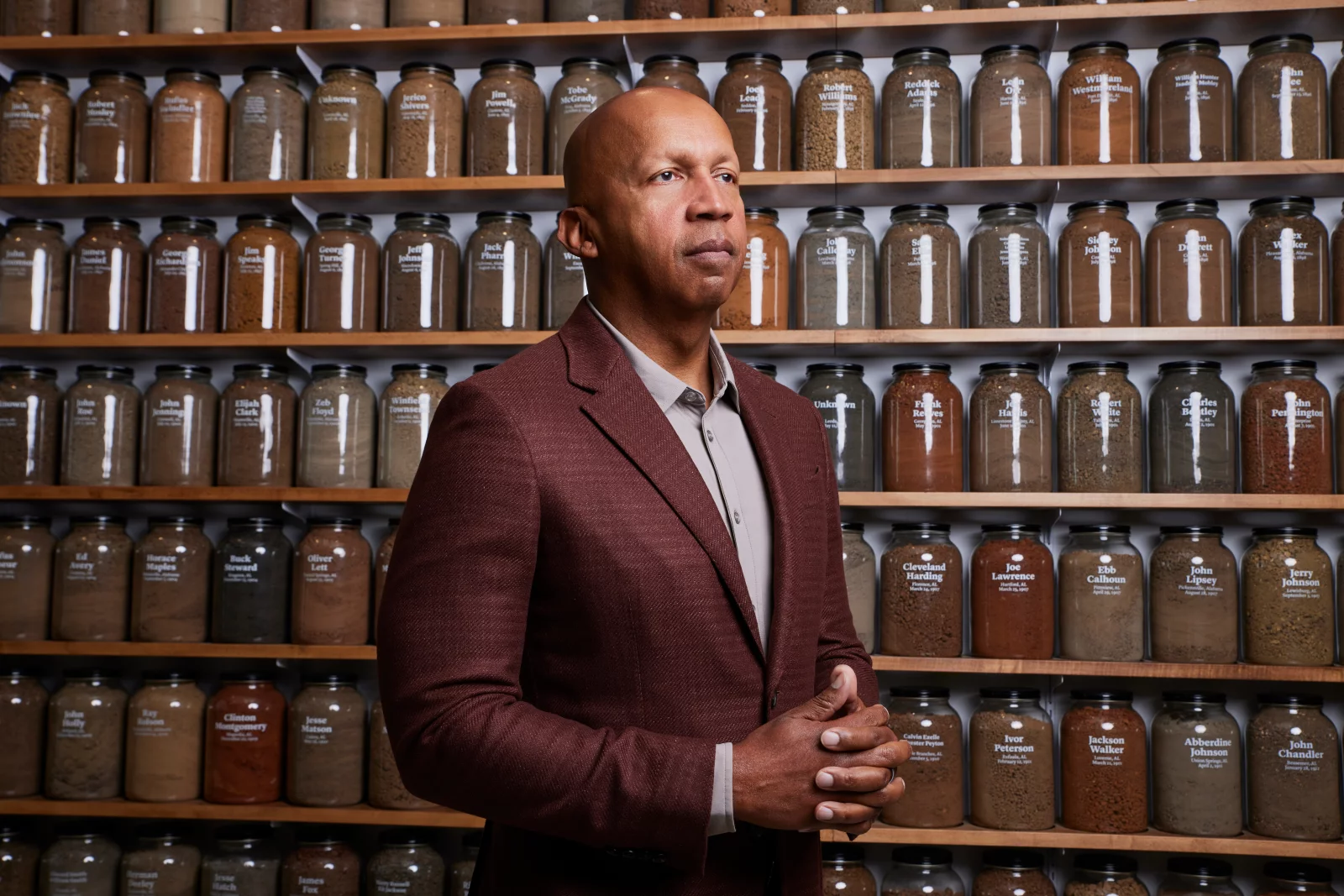
For more than thirty years, few individuals have influenced the American conversation about justice, race, incarceration, and human dignity like Bryan Stevenson. Stevenson stands out as one of the nation’s most important legal advocates and moral voices. This is especially as the United States continues to deal with mass incarceration, wrongful convictions, racial inequality, and discussions about the death penalty,
As the founder and executive director of the Equal Justice Initiative, Stevenson has dedicated his career to defending those often overlooked by society: poor defendants, death row inmates, children sentenced as adults, and people trapped in a justice system that critics argue punishes poverty and race more harshly than crime.
By 2026, his influence has grown beyond courtrooms. It now extends to universities, museums, public memory projects, national policy debates, and global human rights conversations.
The Lawyer Who Changed America’s Death Penalty Debate
Stevenson’s legal efforts have directly changed the course of the American justice system. Through the Equal Justice Initiative, his team has obtained releases for over 140 wrongfully condemned prisoners on death row.
He has argued and won several landmark cases before the United States Supreme Court. A notable victory was the 2012 ruling in Miller v. Alabama, which prohibited mandatory life-without-parole sentences for children aged 17 and younger. This decision led courts across the country to rethink how juveniles are punished.
Years later, Stevenson continued advocating for reform. In another significant Supreme Court win, he helped secure protections for prisoners with dementia facing execution.
His philosophy has been consistent throughout his career: justice must include mercy, especially for vulnerable people who have been failed by the system long before they even reached a courtroom.
“We have a system that treats you better if you’re rich and guilty than if you’re poor and innocent,” Stevenson frequently states in speeches and interviews. This idea has become central to discussions about criminal justice reform in the United States.
From Courtrooms to National Conscience
What sets Bryan Stevenson apart from many legal activists is his ability to guide public opinion from legal theory into emotional and historical awareness.
His bestselling memoir, Just Mercy, turned him into a nationally recognized figure. The book details his efforts to free Walter McMillian, an Alabama man wrongfully sentenced to death based on flawed evidence and allegations of racial bias.
The case has become one of the most widely known wrongful conviction stories in modern American legal history. Stevenson’s work eventually led to McMillian’s release after years on death row.
The success of Just Mercy later inspired a major Hollywood film featuring Michael B. Jordan as Stevenson and Jamie Foxx as McMillian, helping to spread Stevenson’s message to millions of viewers worldwide.
But Stevenson’s impact reaches beyond books and films.
In Montgomery, the Equal Justice Initiative constructed some of the nation’s most significant historical and human rights sites, including the National Memorial for Peace and Justice, the Legacy Museum, and the Freedom Monument Sculpture Park.
These institutions address America’s history of slavery, lynching, segregation, and mass incarceration. Stevenson argues that the country cannot address present injustices without facing historical wrongs.
Why His Voice Matters in 2026
Stevenson’s influence remains strong in 2026 because America’s justice debates are unresolved.
Issues like police accountability, prison reform, racial disparities in sentencing, and juvenile justice continue to dominate discussions nationwide. Many advocates view Stevenson as one of the few public figures capable of bridging political, racial, and ideological divides while maintaining moral clarity.
In March 2026, Stevenson participated in the dedication of Montgomery Square, another Equal Justice Initiative project linked to the history of voting rights and civil rights activism. During this event, he stated, “We have come too far to turn around now,” a sentiment that resonated widely as debates over voting rights and civil liberties intensified across the country.
His national relevance was reaffirmed when the University of Connecticut School of Law named him as its 2026 commencement speaker and honorary Doctor of Laws recipient. The university described his work as having reshaped national conversations about fairness and human dignity.
Even outside legal circles, Stevenson is seen increasingly as a moral historian of America’s racial and judicial systems. In a 2026 interview discussing modern activism and democracy, he highlighted the need to balance immediate legal reform with long-term social understanding.
The Core Philosophy Driving Bryan Stevenson
At the core of Stevenson’s work is the belief that every person is more than the worst thing they have ever done.
This idea has become fundamental to current criminal justice reform movements in the United States. Rather than focusing solely on punishment, Stevenson argues that systems should recognize trauma, poverty, mental illness, childhood experiences, and systemic inequality.
His advocacy has helped reshape national discussions about juvenile sentencing, capital punishment, prison conditions, and racial bias.
Supporters often describe Stevenson as a rare public intellectual who combines legal knowledge with emotional appeal. Critics of the American prison system see him as a link between civil rights activism and legal reform.
His speeches circulate widely in universities, law schools, churches, nonprofit organizations, and leadership conferences because they merge tough legal realities with hope and humanity.
A Global Human Rights Figure
Stevenson’s influence now extends well beyond the United States.
Over the years, he has earned some of the world’s most prestigious awards, including the MacArthur Foundation “Genius Grant,” the American Civil Liberties Union National Medal of Liberty, and international human rights honors like Sweden’s Olaf Palme Prize.
Many legal scholars now consider him among the most significant public interest lawyers of the modern era.
At a time when trust in institutions remains shaky across America, Bryan Stevenson continues to assert that justice systems must prioritize fairness, truth, mercy, and accountability if democracies want to remain stable.
This message has made him more than just a lawyer.
It has positioned him as one of the defining moral voices in contemporary America.